1992
Mabo judgement
On 3 June 1992 the Mabo judgment by the High Court of Australia recognises Aboriginal and Torres Strait Islander traditional title to land had survived British settlement. However, the judgment said some extinguishment of traditional title had occurred.
1995
The Land Account and ILC established
In February the Keating government responds to the Mabo judgement, in part, by establishing the The Land Fund and Indigenous Land Corporation (ATSIC Amendment) Act 1995 and creating the ILC. The Land Fund, now called the Land Account, aims to help Indigenous people to acquire land and manage it in a sustainable way, to provide economic, social and cultural benefits for themselves and for future generations. The Land Fund receives money from the Federal Budget for the next 10 years to establish a capital base.

The Indigenous Land Corporation began operations
The ILC begins operations on 1 June 1995
First ILC Board meeting
The first Board comprising David Ross (Chair), Peter Yu (Deputy Chair), Lowitja O’Donoghue, Noel Pearson, and Steve Gordon meets on 4 June. Their focus is on land acquisition, as land management remained an ATSIC responsibility until 1 July 1997.

1996
First National Indigenous Land Strategy (NILS)
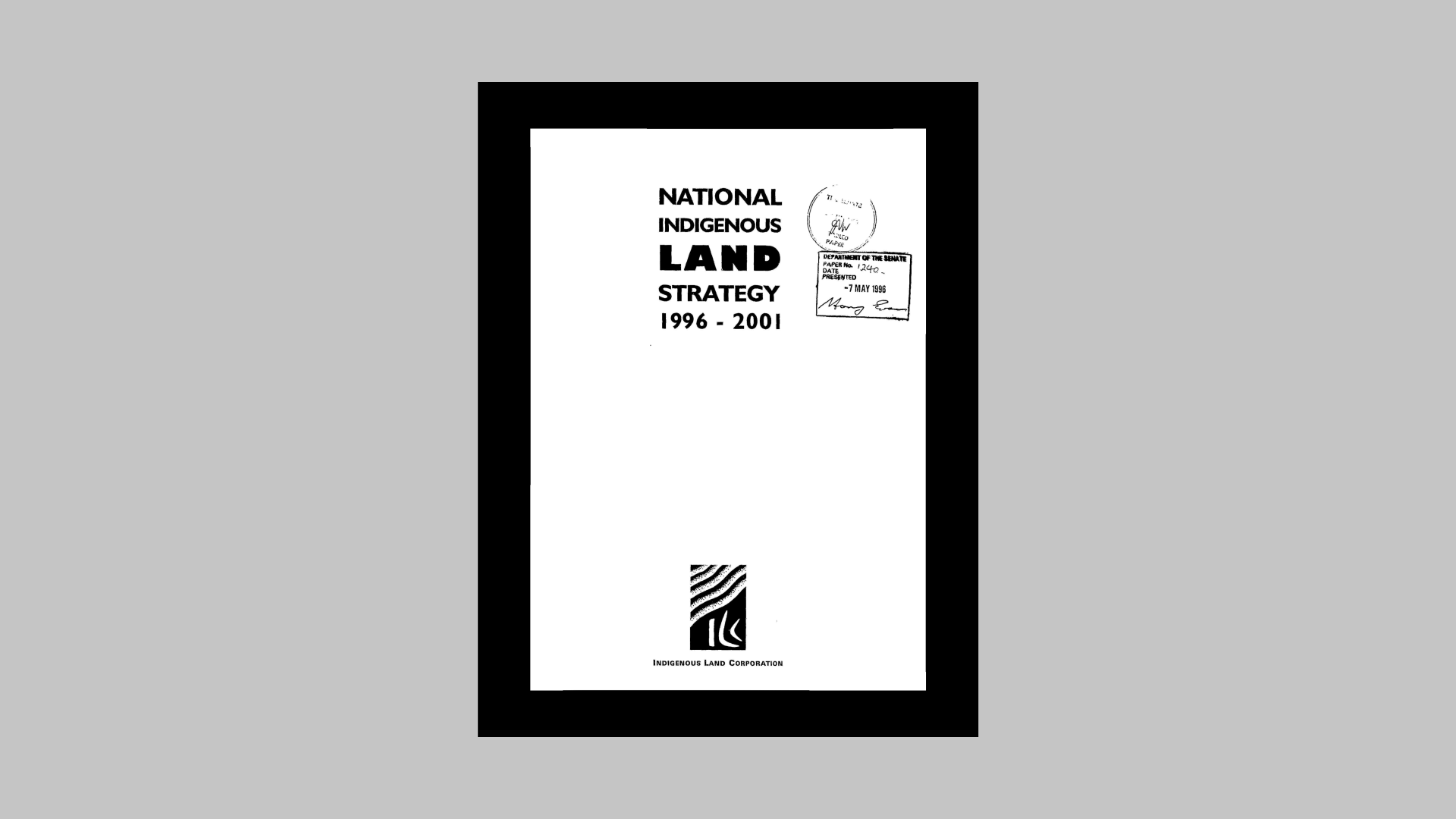
The first NILS covering the years 1996-2001 is tabled in Parliament by the Minister for Aboriginal and Torres Strait Islander Affairs, Senator the Hon. John Herron, on 6 May 1996. A companion series of seven Regional Indigenous Land Strategies based on the NILS is approved by the Board in June 1996.
First land purchase and grant
West Swan Primary School, near Perth in WA is purchased on behalf of the Manguri Land Enterprises Incorporated. It was granted to them in November 1996.

1999
Second ILC Chair and Board appointed
Sharon Firebrace appointed as ILC Chair along with four new Directors.
2001
Second National Indigenous Land Strategy
The ILC’s Board revises the first National Indigenous Land Strategy. The new NILS reflects a shift from purely acquisition to long-term, sustainable land use planning.
Third ILC Chair and Board appointed
Shirley McPherson appointed Chair of the ILC Board in August 2001. The Board focuses on building landholder capacity and on delivering economic benefits from land. Applications for urban property increase and in 2005-06 almost half the land purchased in the previous three years was urban.
2003
Kimberley Indigenous Management Support Services
In January 2003, the ILC signs a three-year agreement with the WA Agriculture and Food Dept. for KIMSS to support commercial pastoral activity across Indigenous-owned stations. Now called the Indigenous Landholder Service, it delivers extension services and land management funding across six large regions of WA and around 70 Indigenous-owned properties.
Major emphasis on employment and training
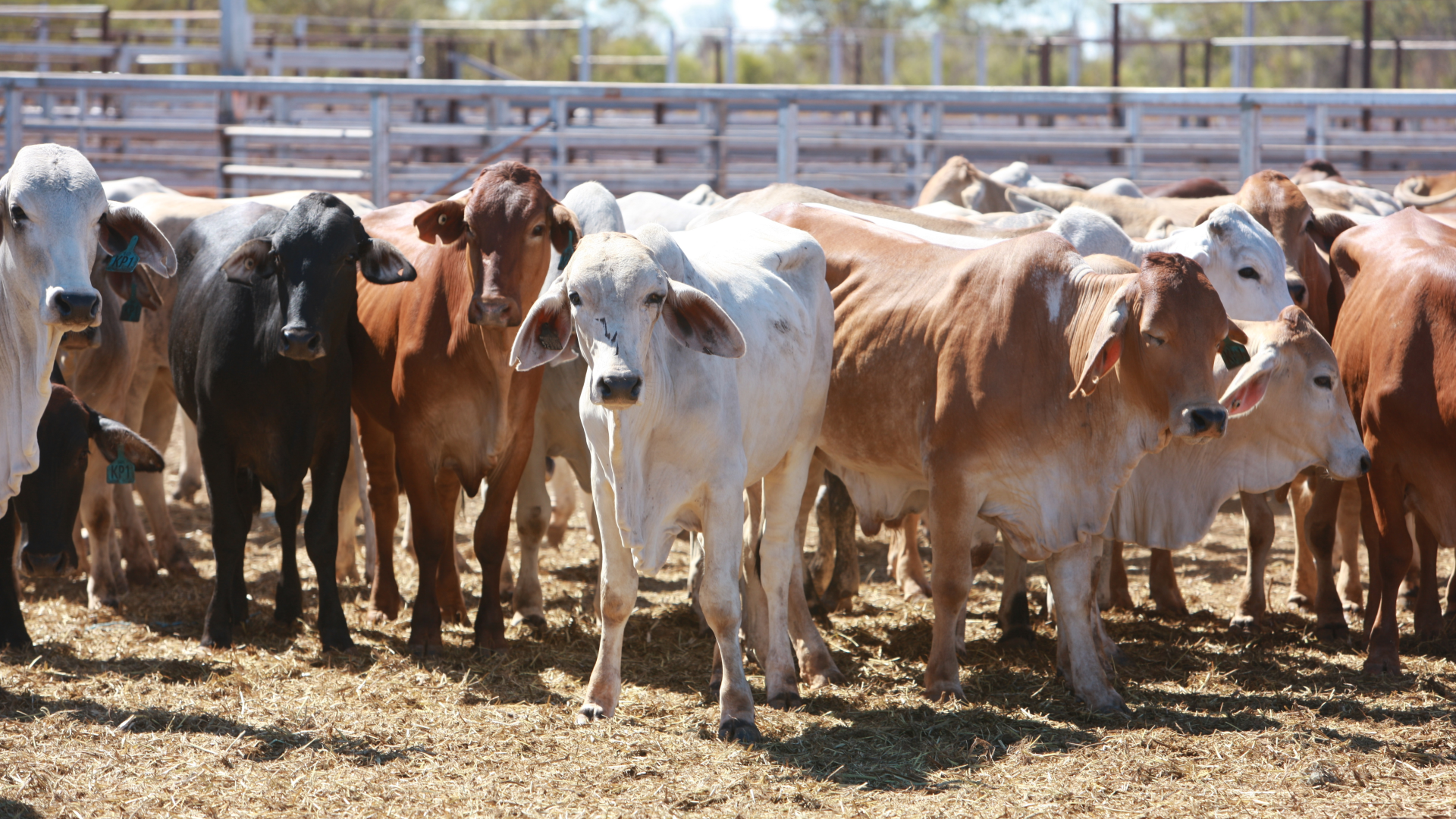
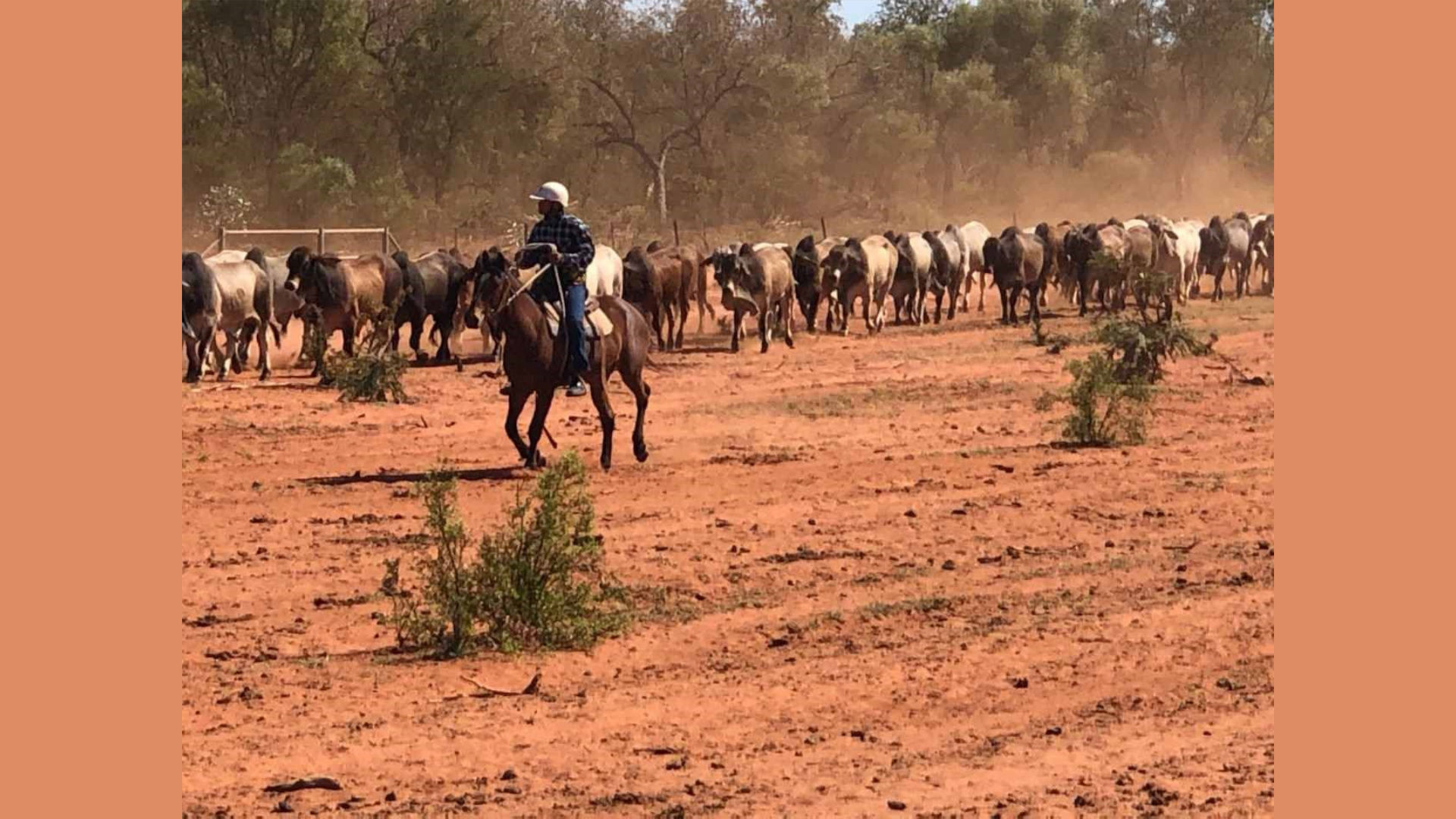
The ILC initiates the IPP with the Northern Land Council, Central Land Council, Northern Territory Government, the Northern Territory Cattlemen’s Association and Commonwealth Department of Employment. The IPP increases production on Indigenous-owned NT cattle properties to provide employment and training in the pastoral industry.
2004
Redfern Public School purchased
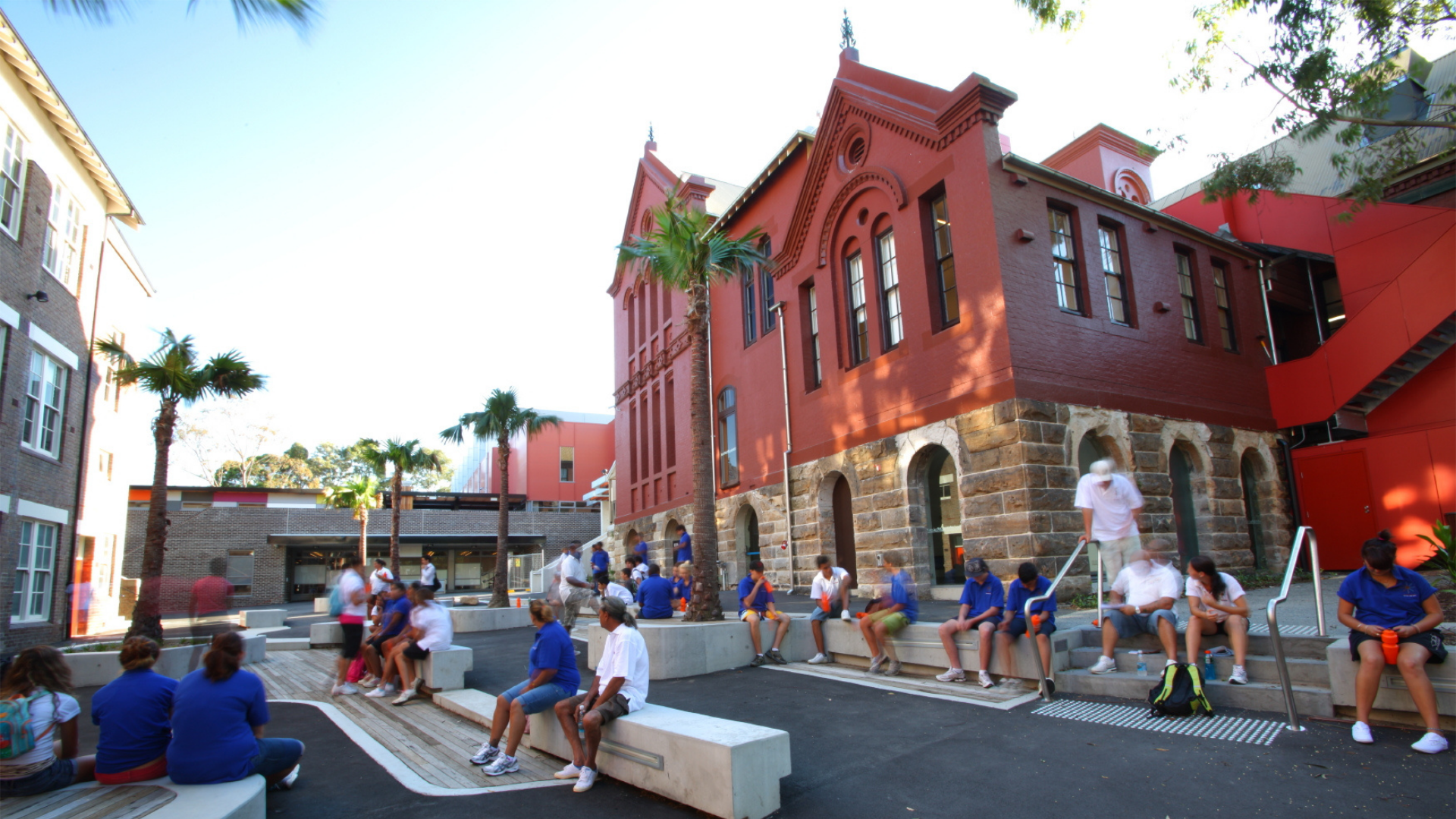
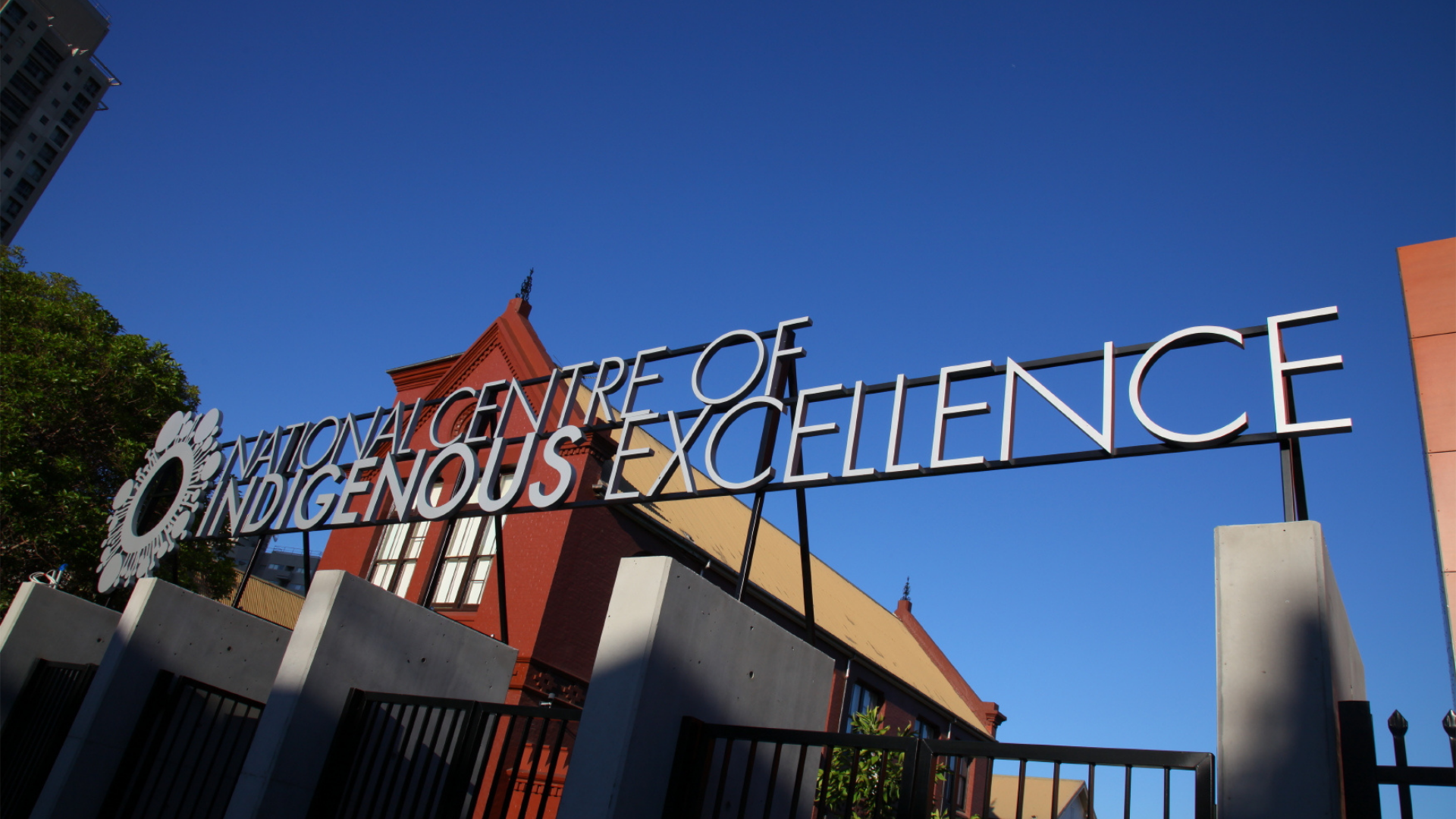
The ILC purchases the former Redfern Public School in Sydney. The purchase is part of a strategy to address the disadvantage of city-based Indigenous people. The ILC funds construction of the National Centre of Indigenous Excellence. The NCIE runs sporting, educational, cultural and leadership programs to benefit young Indigenous people from around Australia.
2006
Indigenous Protected Areas partnership
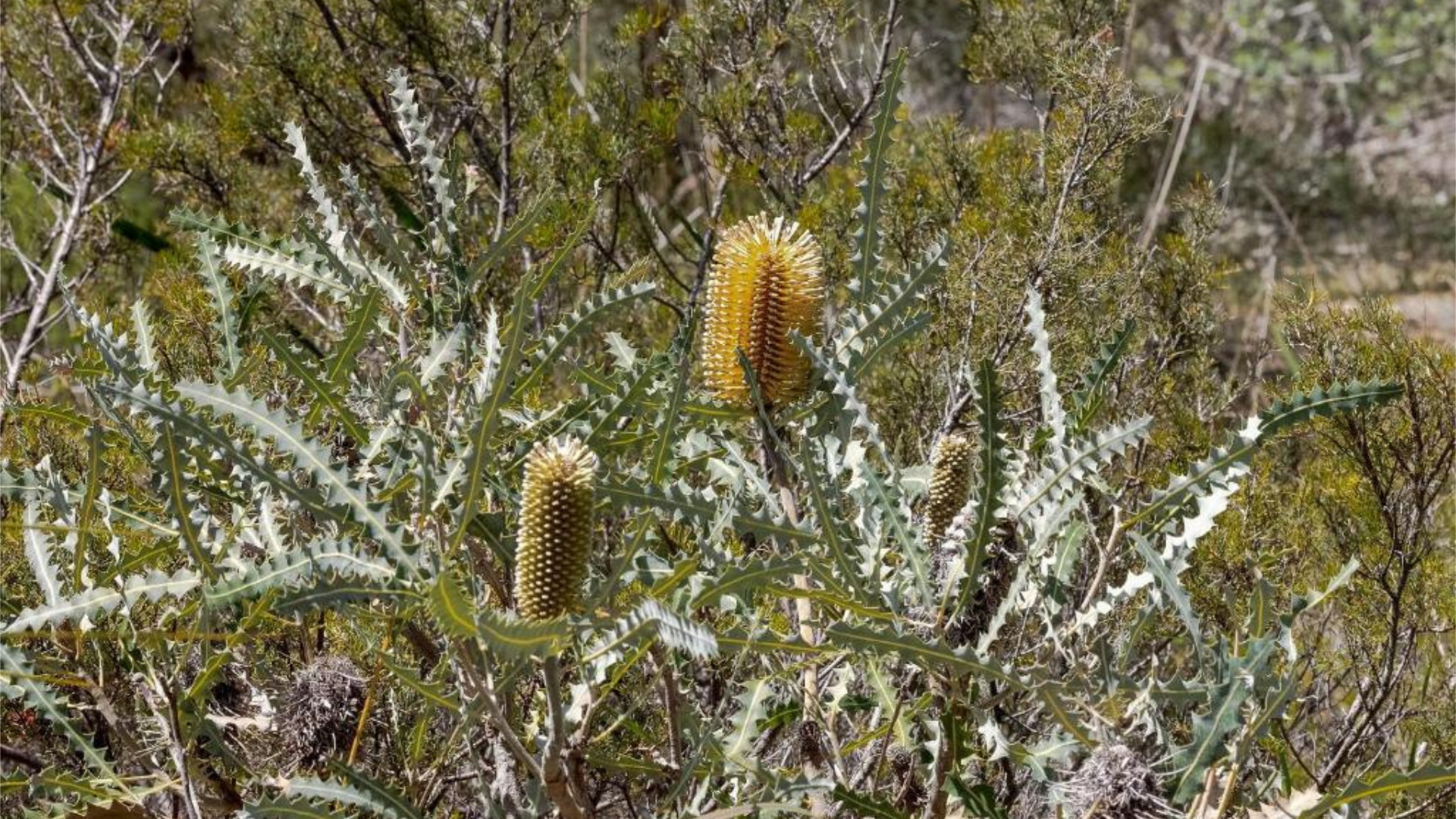
The ILC enters into a three-year partnership with the Commonwealth Department of the Environment to develop at least 10 new IPAs. By 2009, 19 IPAs are declared.
2007
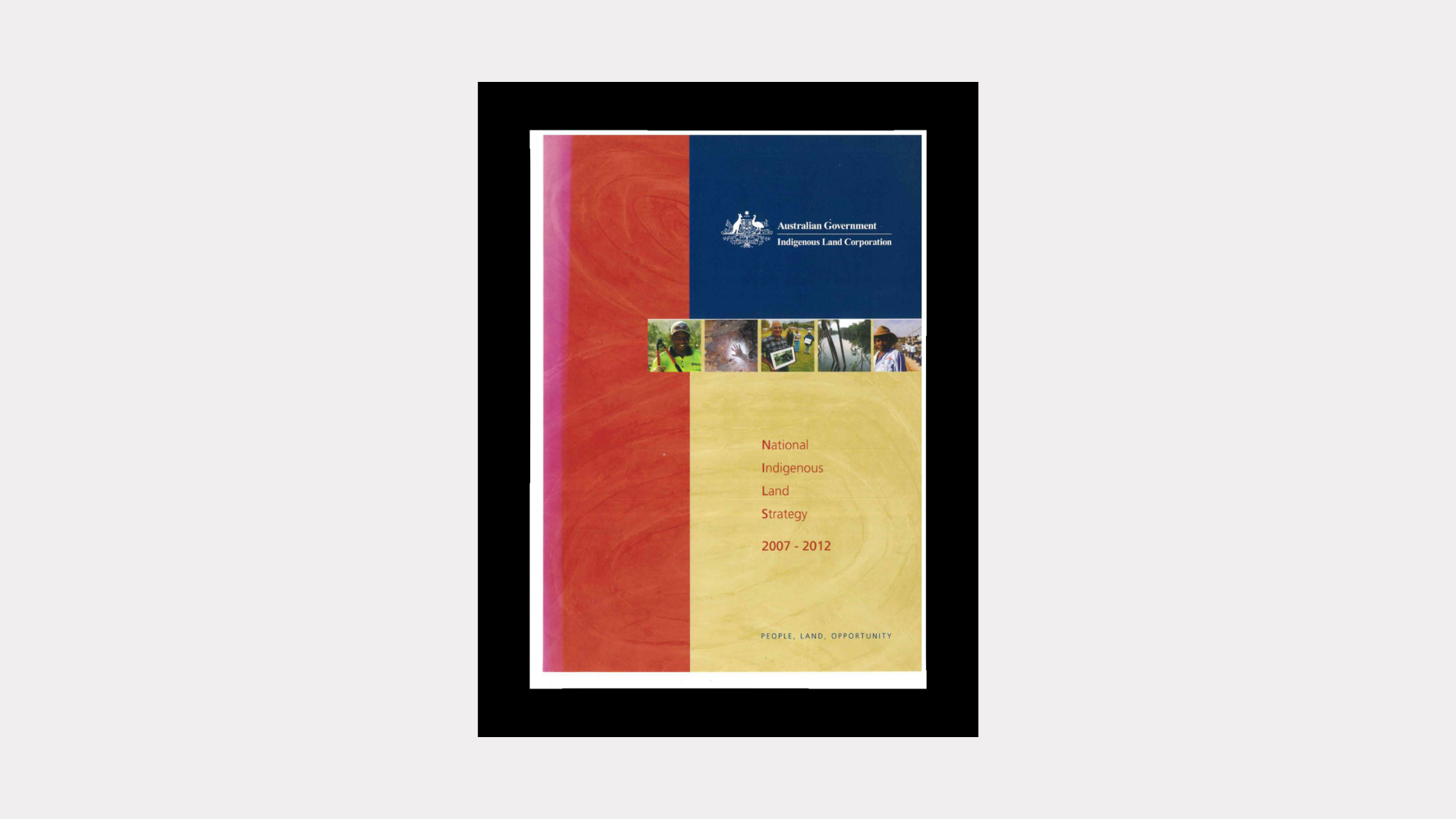
National Indigenous Land Strategy 2007-2012
The NILS 2007-2012 focuses on the delivery of education, training and employment outcomes from Indigenous owned and managed land and on monitoring of benefits achieved.
Black Theatre Building
Work starts on the site of the former Black Theatre in Redfern, Sydney, a groundbreaking urban Indigenous cultural site in the 1970s and 1980s. The ILC constructs a three-storey, multi-purpose office building to house Indigenous organisations including a purpose-built radio station and training facility for Gadigal Information Service which broadcasts Koori Radio.

2008
Training to Employment program rolled out
The ILC allocates $9 million over three years to expand the T2E model to 12 ILC-run businesses.
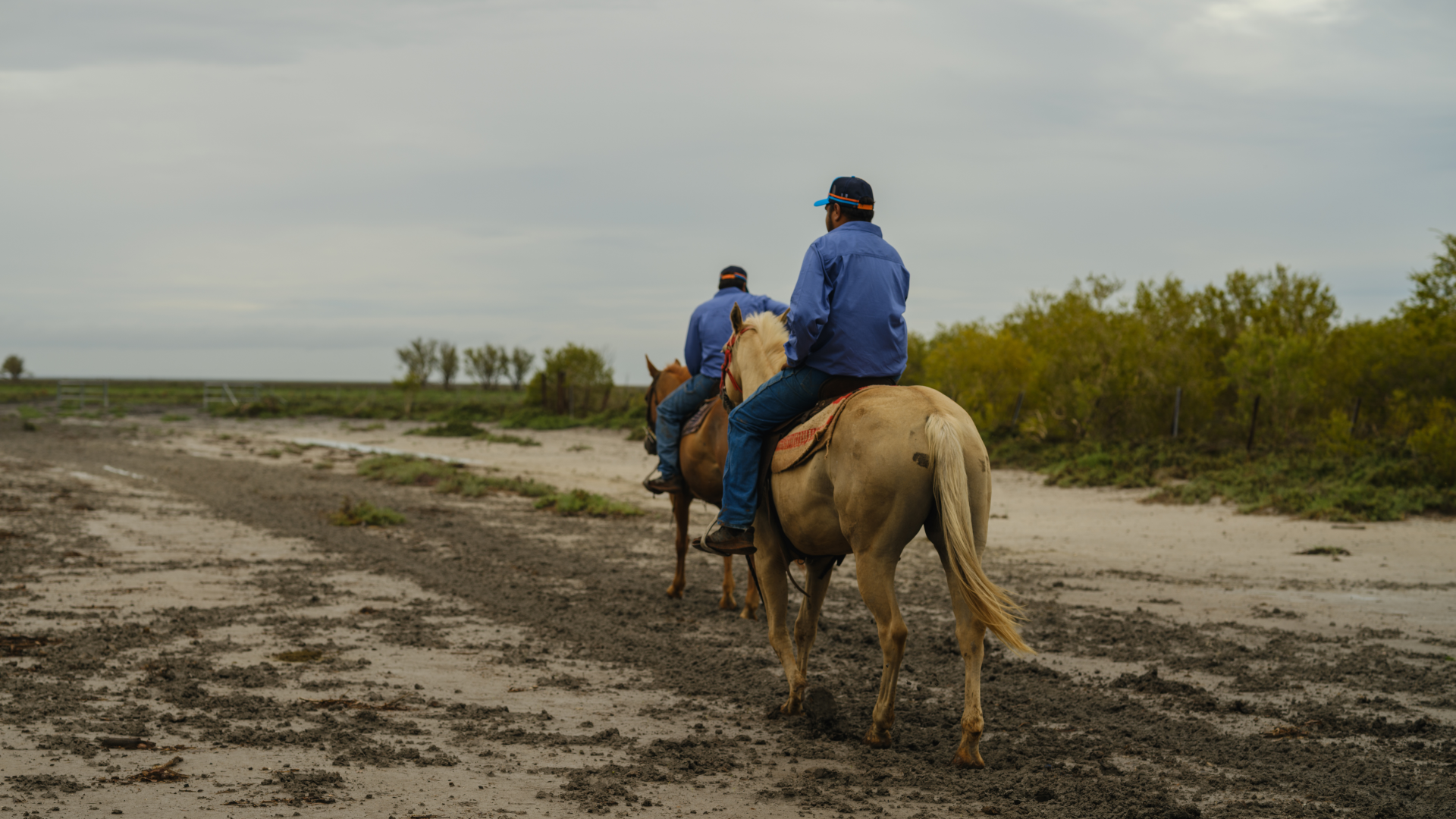
New businesses open at Gunbalanya
Gunbalanya Station and Meats is established and trains and employs pastoral and meat workers from the Gunbalanya community.
2009
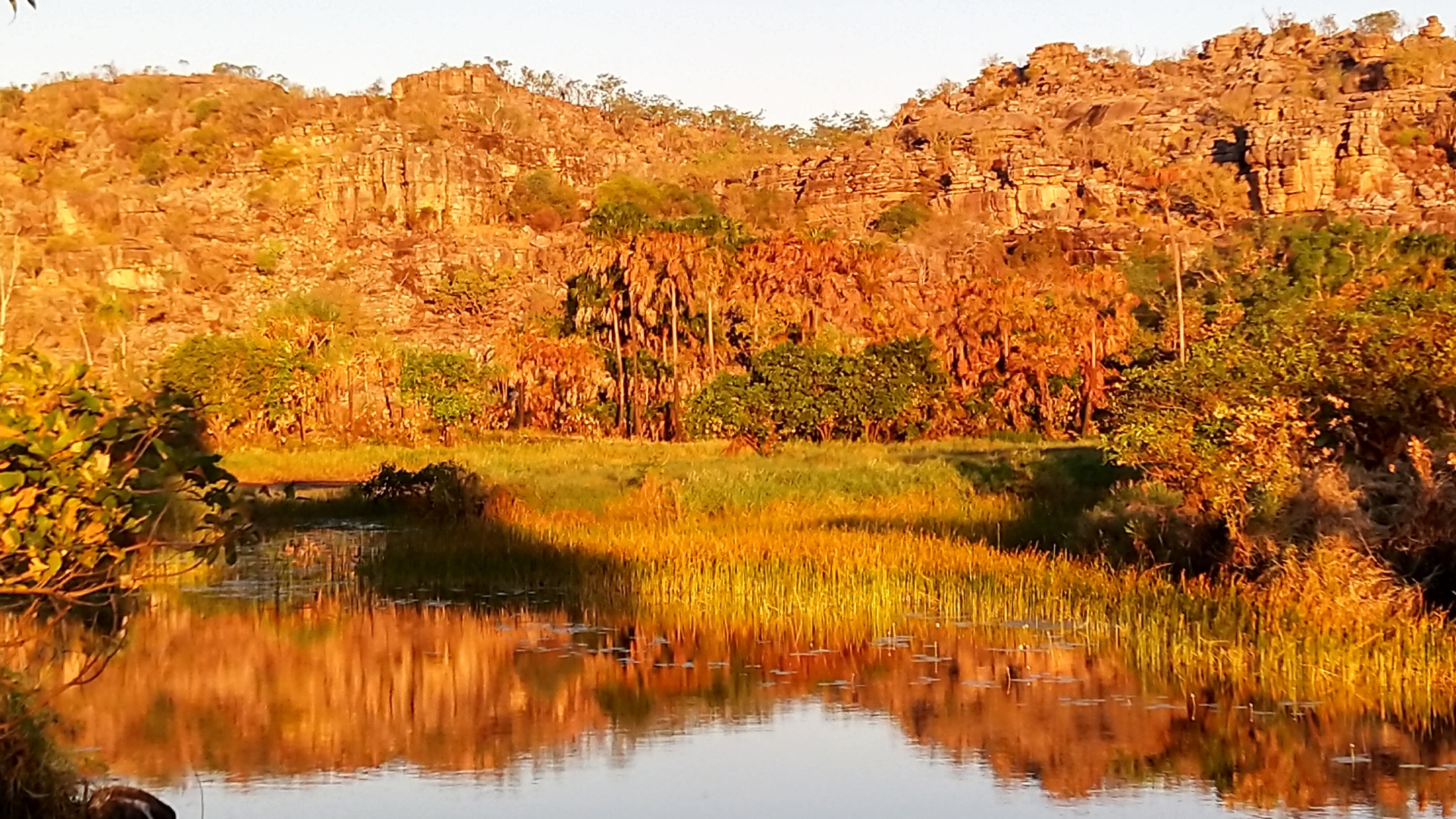
Mossman Gorge Centre project begins
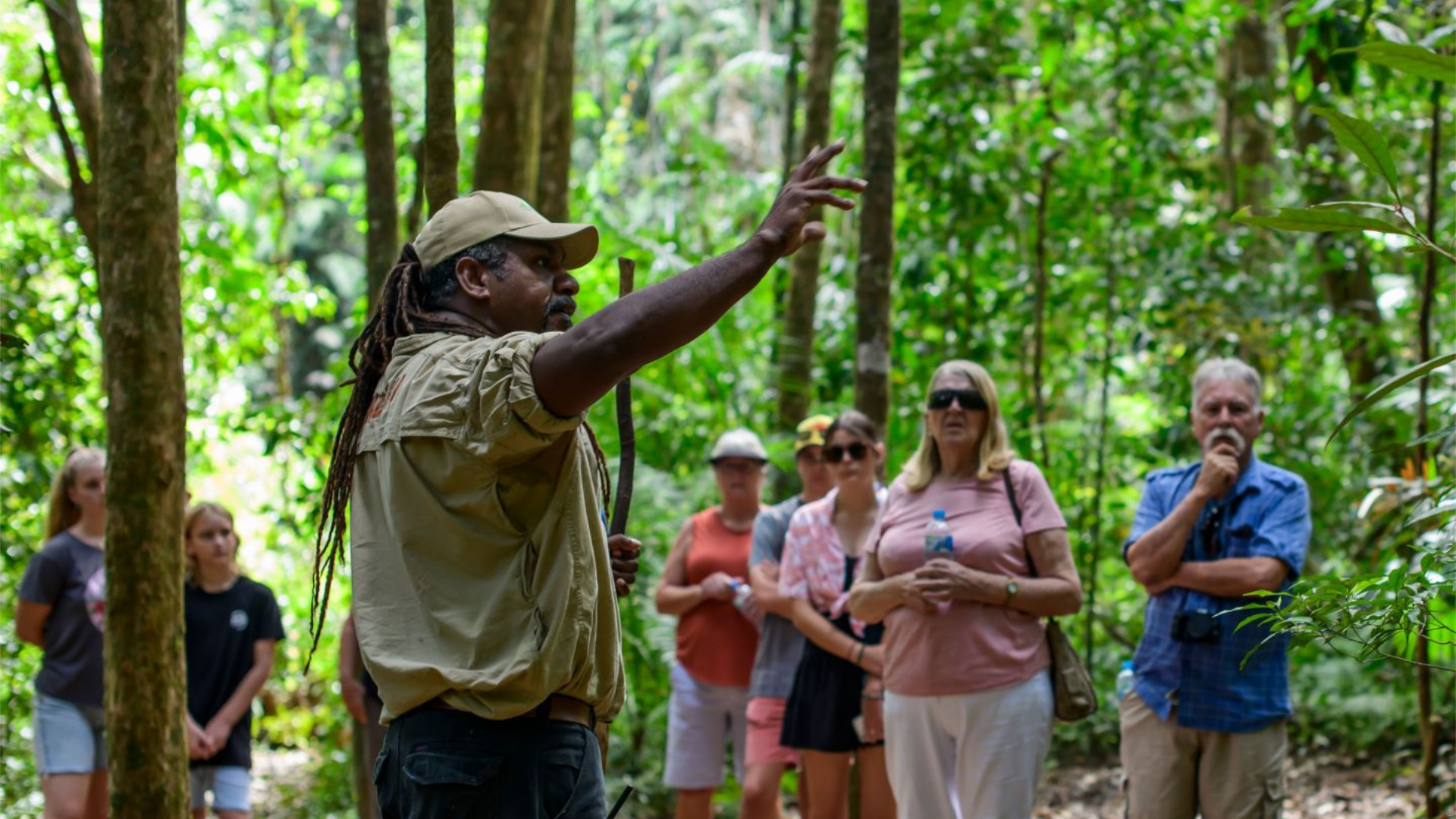
Land near the Mossman Gorge Aboriginal Community is purchased to build a cultural and environmental tourism hub to be staffed by local Indigenous people, and to offer training in hospitality for young Indigenous people.
2010
National Centre of Indigenous Excellence opens
In January 2010, the NCIE opens for business. The NCIE develops as a respected institution in Redfern and nationally, visited by 5000 Indigenous young people each year.
Fish River acquired
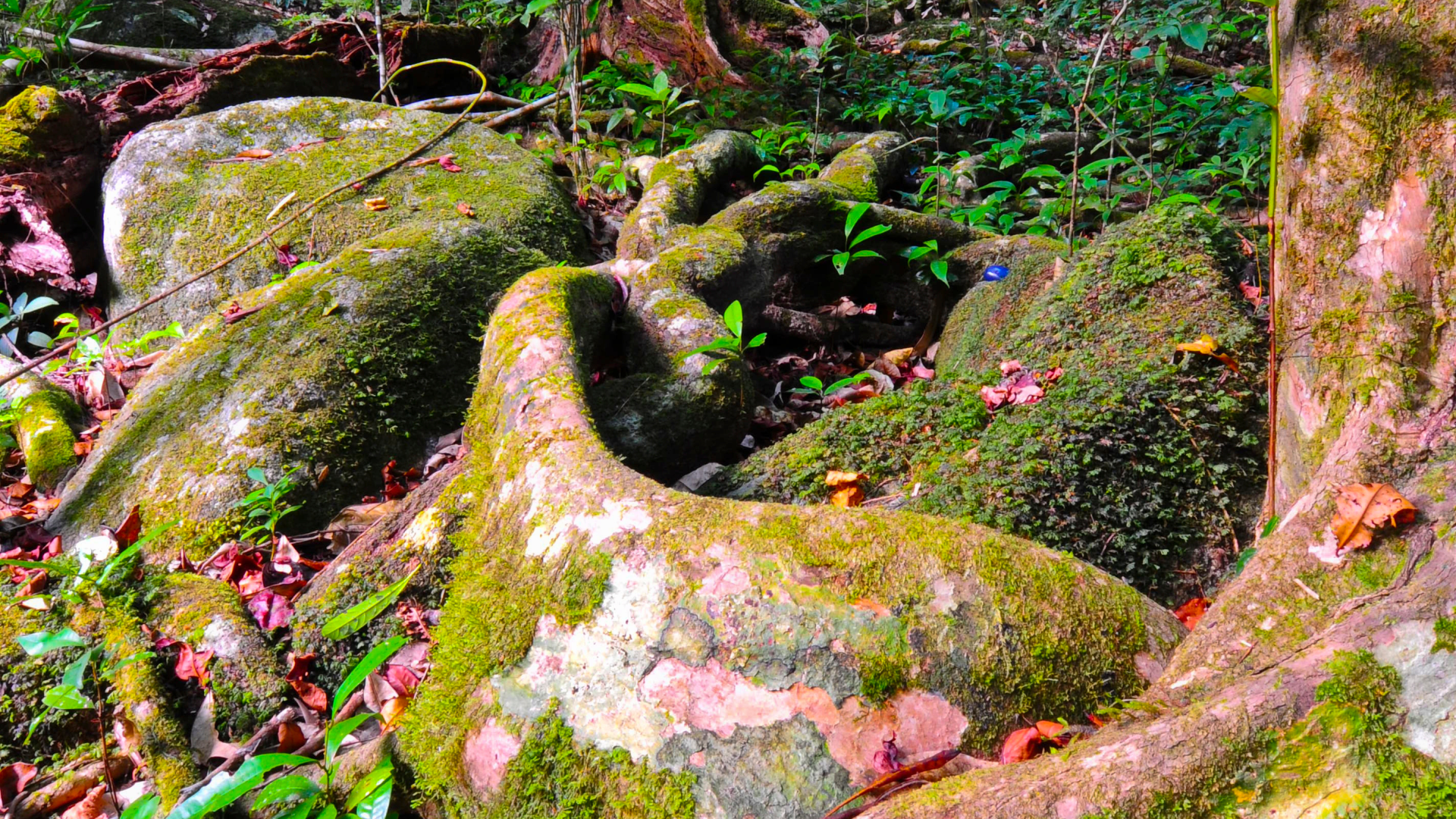
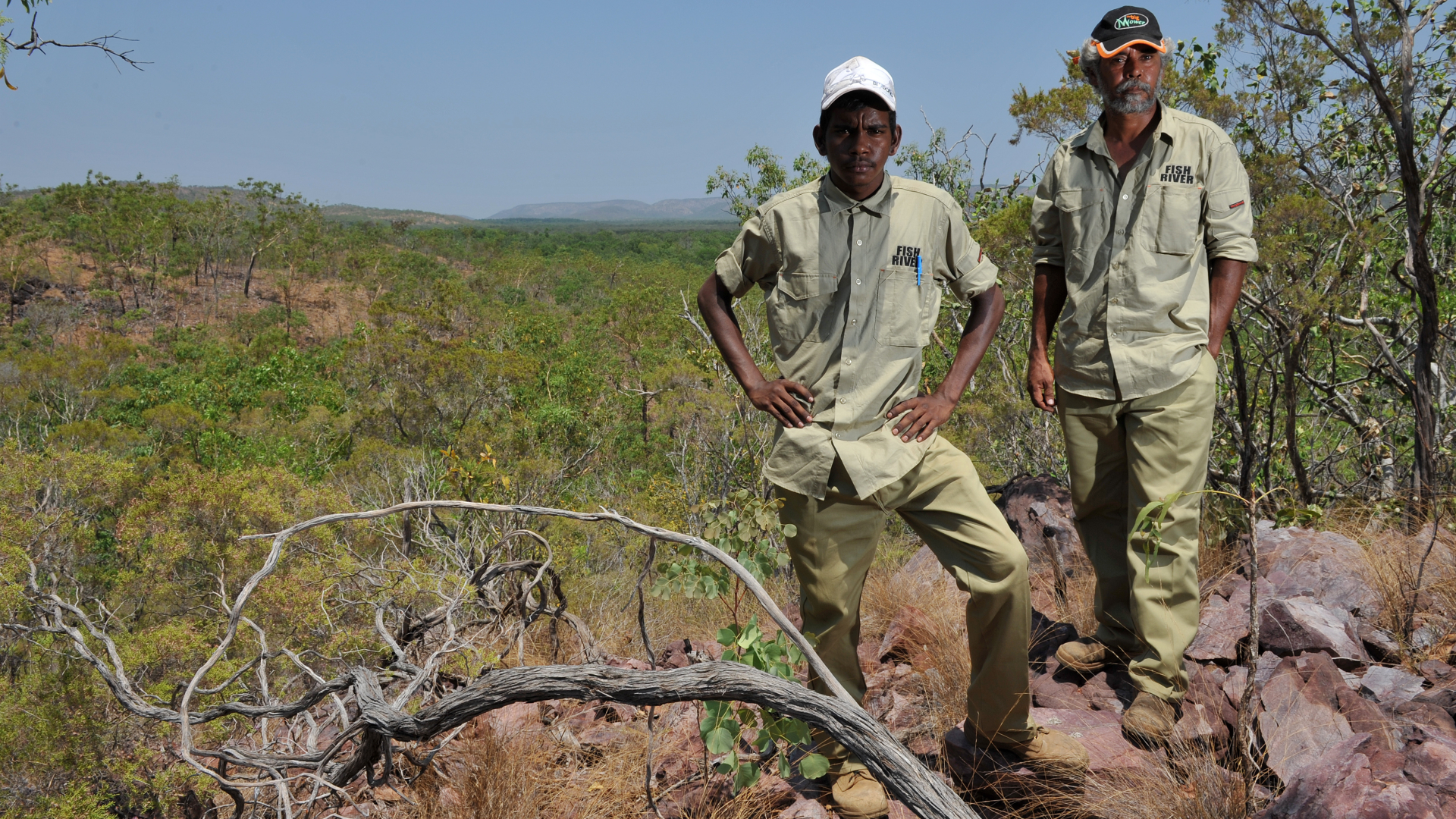
The ILC acquires the Fish River wilderness property in partnership with the Commonwealth Environment Department and a number of charitable environmental groups. The property becomes a model of managing the environment and for Indigenous economic benefit from carbon credits.
Ayers Rock Resort purchased
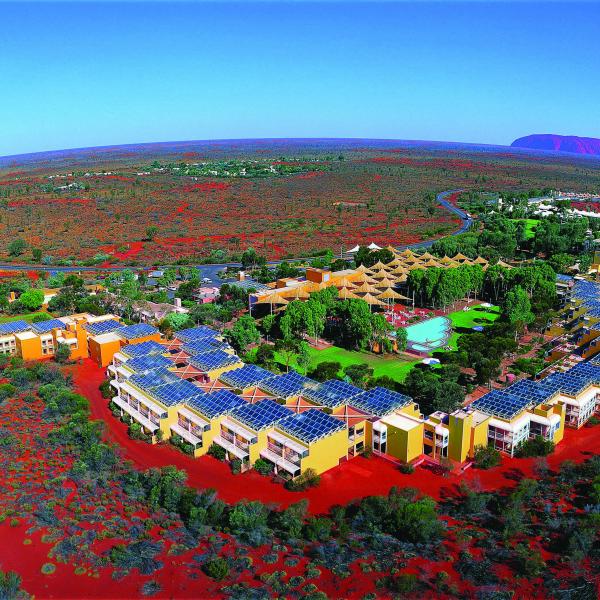
The ILC buys Ayers Rock Resort to provide employment and training benefits for Indigenous people nationally. A new subsidiary, Voyages Indigenous Tourism Australia is created to operate the ILC’s tourism portfolio. A training academy is established at the resort to provide young Indigenous people with accredited training in hospitality and the resort significantly increases its level of Indigenous staff. When the ILC buys the resort Indigenous employees represent 1% of the workforce. Indigenous employees now represent 32% of the workforce.
2011
Fourth ILC Chair and Board appointed
Dr Dawn Casey is appointed as ILC Chair along with three new Directors. A further two new Directors are appointed in 2013.
T2E program expanded
In June 2011, an additional $8.6 million extends the T2E program for three years. The extended initiative includes establishing a shearing training school at Merriman Station near Brewarrina, NSW. Trainees are provided with board, wages, and training integrated into the operation of the businesses.
2012
Mossman Gorge Centre opens
Mossman Gorge Centre opens in June 2012, with 90% Indigenous staffing. More than 240,000 people go through the doors in the first year of operation.
2013
New 2013-17 National Indigenous Land Strategy
The 2013-2017 NILS is released with a stronger focus on collaboration across regions with Indigenous organisations, government agencies and industry bodies, and includes a new ILC Native Title Policy.
Clontarf College WA gifted to ILC
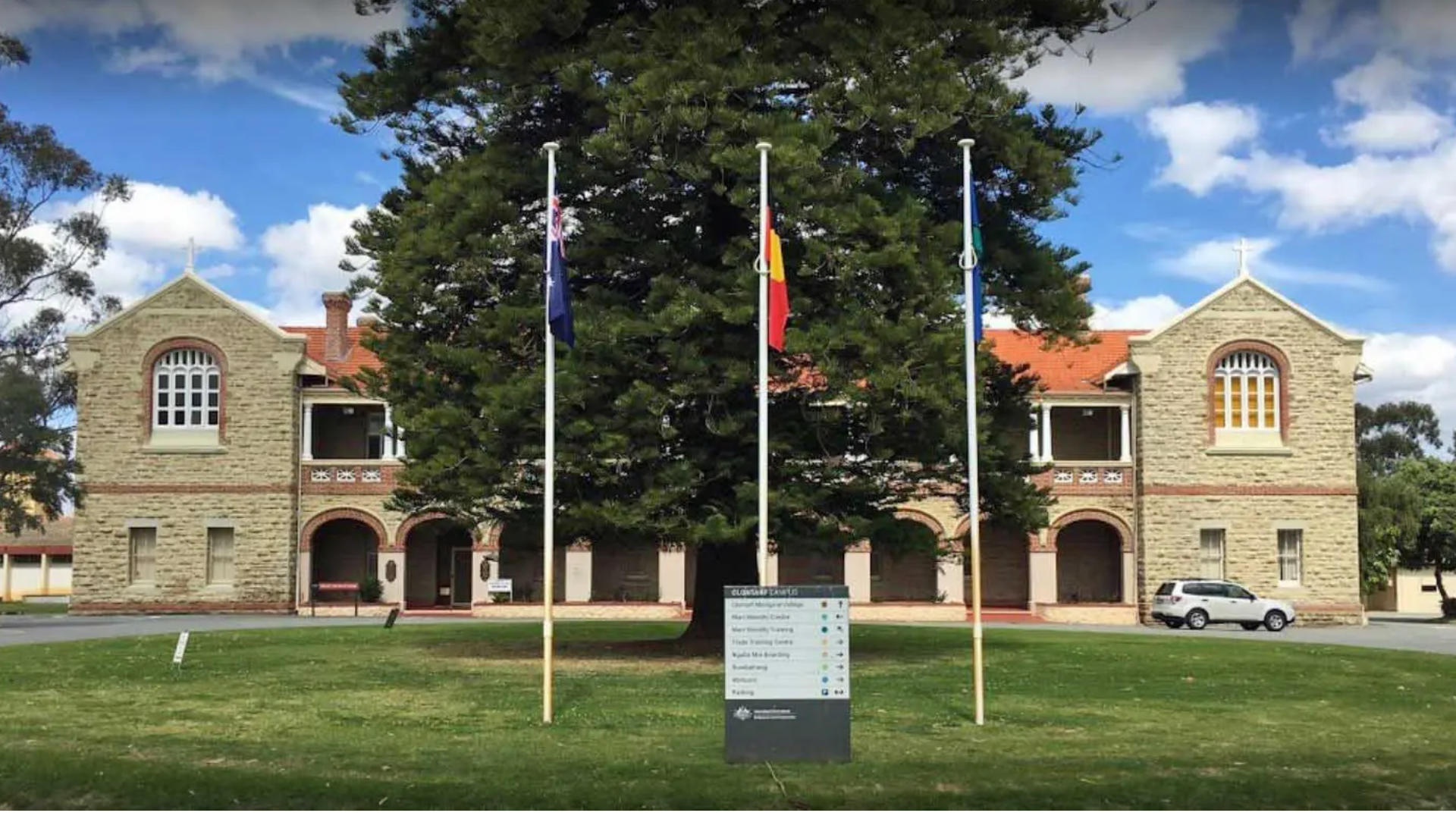
The Christian Brothers organisation in Perth gifts a valuable inner-city property to the ILC, including land and historic buildings belonging to Clontarf College, founded in 1901 on the banks of the Canning River. The Clontarf College site is a multi-use campus which houses major Indigenous service-delivery organisations in WA.
Australia’s first sale of carbon credits
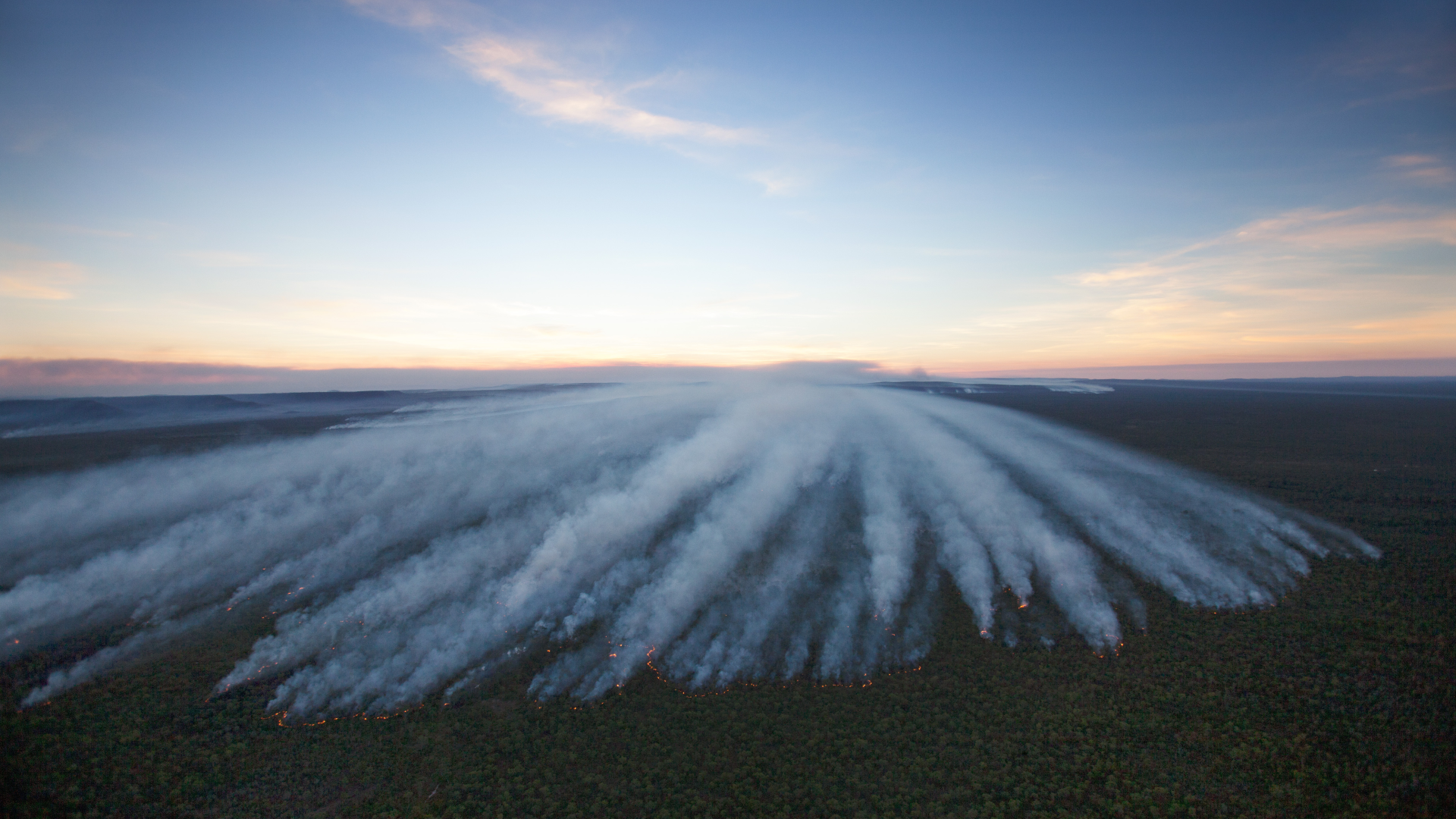
In an Australian first, the ILC sells 25,884 Australian Carbon Credit Units from the Fish River Fire Project to Caltex Australia. Sales of ACCUs have continued each year, providing revenue for land management, training and jobs on the property.
2014
Review into ILC and Indigenous Business Australia
In December 2014, the Minister for Indigenous Affairs, Senator the Hon. Nigel Scullion, announces a review of ILC and IBA One aspect of the review is to examine the option a merging the two agencies. The government later decides not to proceed with a merger.
Stronger Land Account Bill
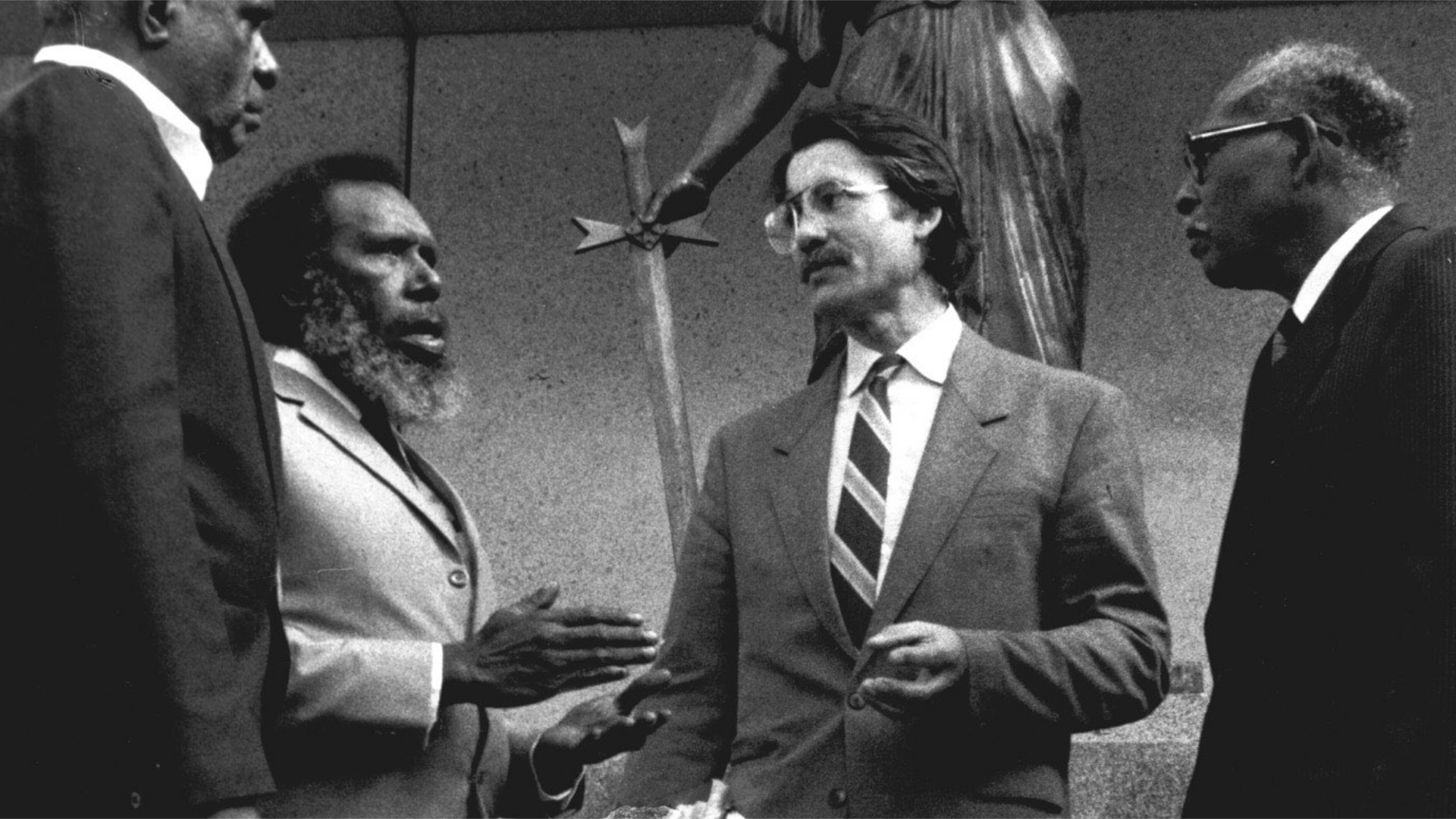
The Stronger Land Account Bill is released on 24 March 2014, and endorsed on the same day at Old Parliament House by a group of senior Indigenous leaders, including three who had helped negotiate the Mabo settlement and served on the first ILC board: Lowitja O’Donoghue, David Ross and Noel Pearson. This leaders group also includes Patrick Dodson, Aden Ridgway, Tom Calma and Kirstie Parker, co-chair of the National Congress of Australia’s First Peoples. The Bill developed by the ILC was largely adopted by the Australian Greens and introduced to the Senate in June 2014.
2015
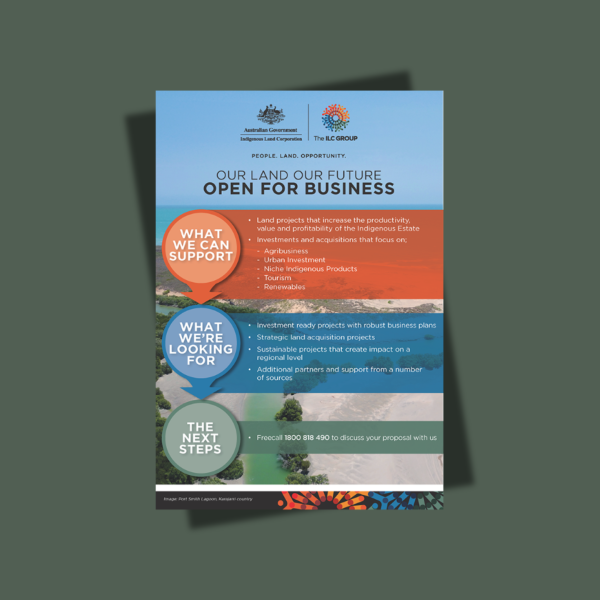
Our Land Our Future
The ILC’s Our Land Our Future program is launched. The ILC supports land acquisition and management projects by funding projects, working with co-investors or via enterprises under partnerships or a subsidiary. The Board commits up to $30 million over three years for land-based projects over $100,000.
First Board meeting for NIPE
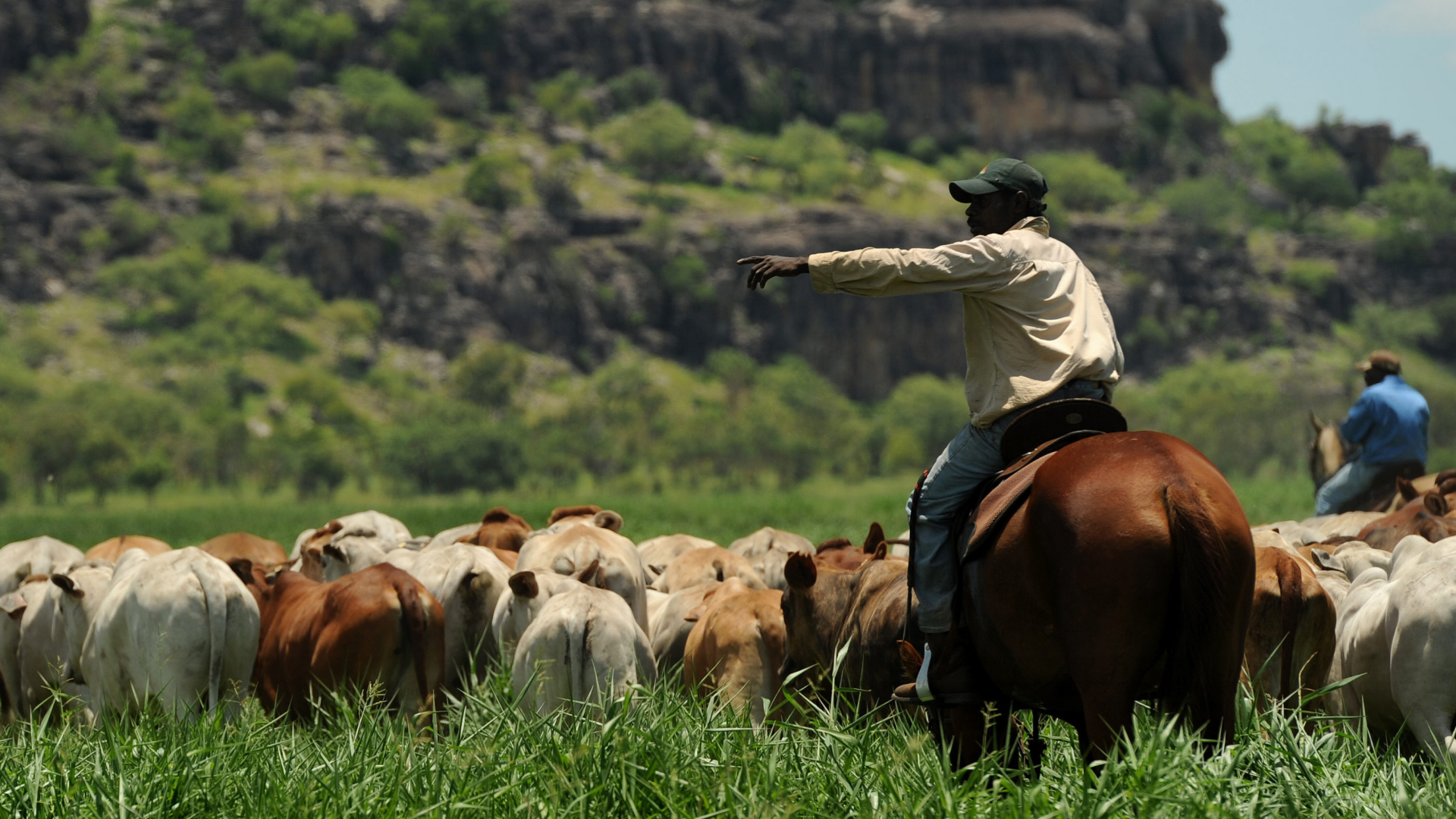
National Indigenous Pastoral Enterprises (NIPE) becomes a fully-functioning subsidiary with its own Board of Directors chaired by ILC director Neil Westbury.
Our Land Our Jobs
The Our Land Our Jobs program (formerly T2E) is launched as a central part of the ILC’s operations. OLOJ operates at training centres on ILC properties and businesses and guarantees a job offer on an ILC enterprise or with other employers.

2017
Appointment of first Indigenous woman as ILC Deputy CEO
The Indigenous Land Corporation (ILC) Board announced the appointment of Tricia Button as its new deputy chief executive officer – the first Indigenous woman in the organisation to hold the prestigious leadership position.

2018
New era dawns for ILSC
The legislation to improve the sustainability of the Land Account and to extend the ILSC’s operations to include water were passed by Parliament on 28 November 2018.
2019
ILC renamed as Indigenous Land and Sea Corporation
On 1 February 2019, the ILC became the Indigenous Land and Sea Corporation (ILSC), with an extended remit to include the acquisition and management of interests in water as well as land.

ILSC established Agribusiness Investment Program
In January 2019, the ILSC established the Agribusiness Investment Program to provide a funding stream to support commercial growth, primarily through capital investment and/or business capability, of the Indigenous agribusiness sector.

2021
ILSC appoints Group Chief Executive Officer
The ILSC announced the appointment of its new Group Chief Executive Officer, welcoming Joseph Morrison to the role. ILSC Chairman Eddie Fry said Mr Morrison would commence his three-year term on 18 January 2021.

ILSC appoints Chairperson
Ian Hamm, a Yorta Yorta man with 30 plus years in Aboriginal aff airs, was appointed Chair. His appointment was part of a substantial transition of Board members that occurred in 2021-22.

2022
ILSC appointed as agent Prescribed Body Corporate
The ILSC was appointed as an agent Prescribed Body Corporate (for the first time under Native Title regulations) for the Birriman-gan Common Law Holders.

2023
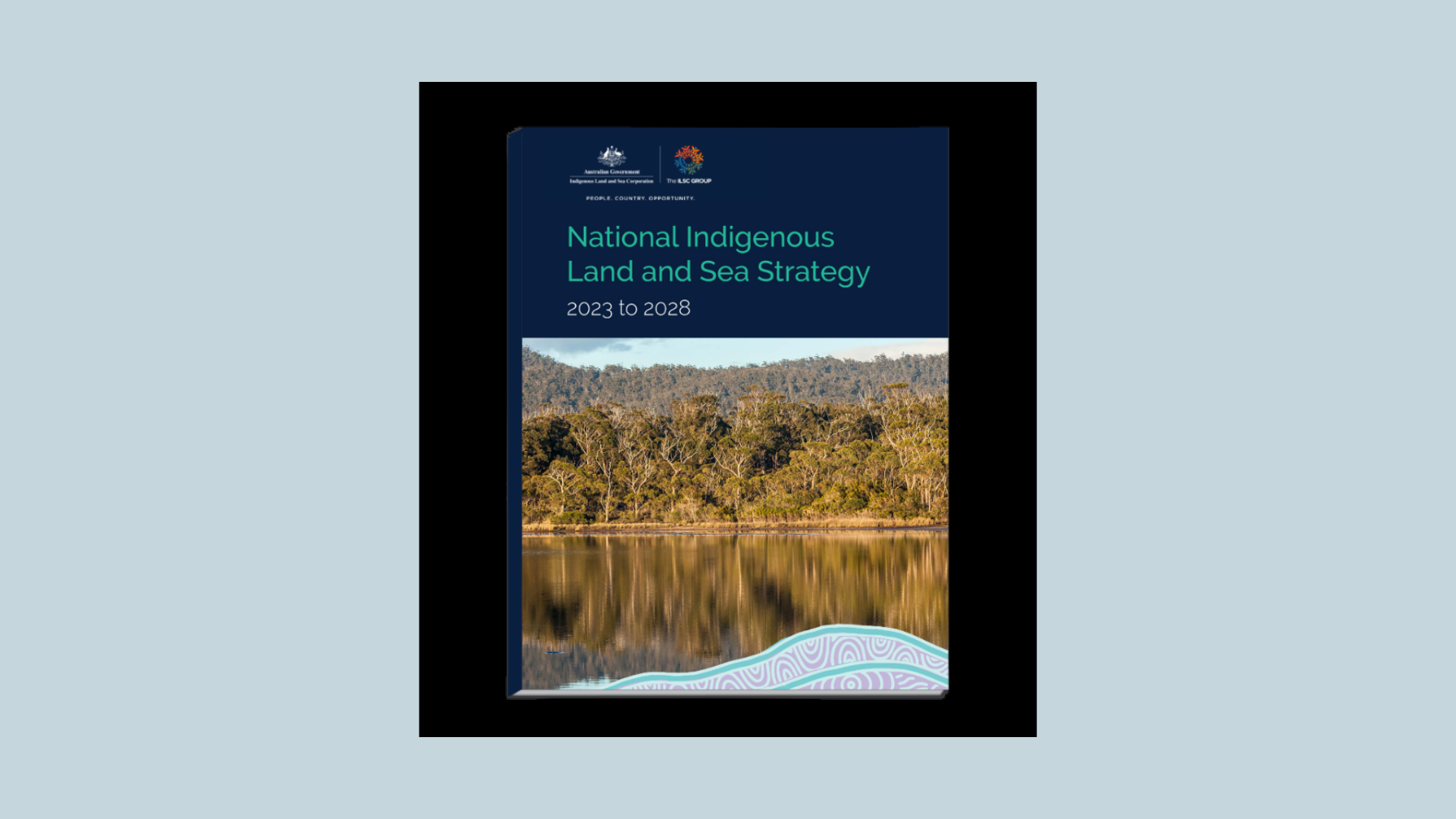
The National Indigenous Land and Sea Strategy 2023-28 launched
The NILSS 2023-28 was launched, making 27 commitments that will shape the ILSC to reflect First Nations aspirations and accelerate divestment from agribusiness and subsidiaries.
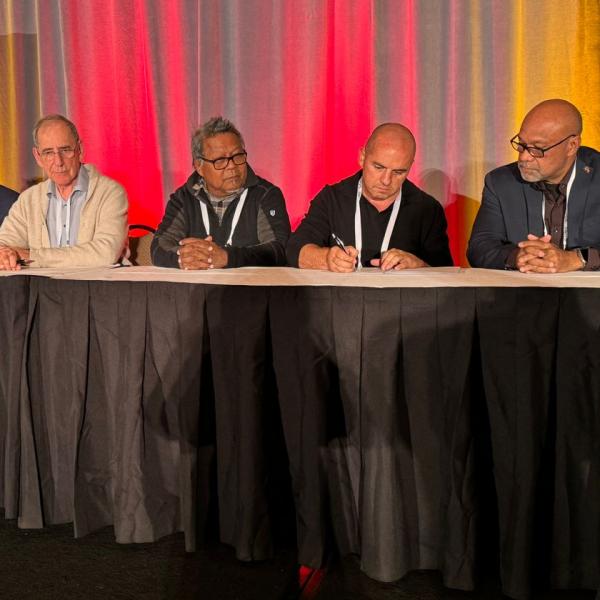
The ILSC signs historic agreement
The ILSC signed the historic agreement - Memorandum of Understanding - with First Nations organisations in Canada and Australia to address global Indigenous economic exclusion.
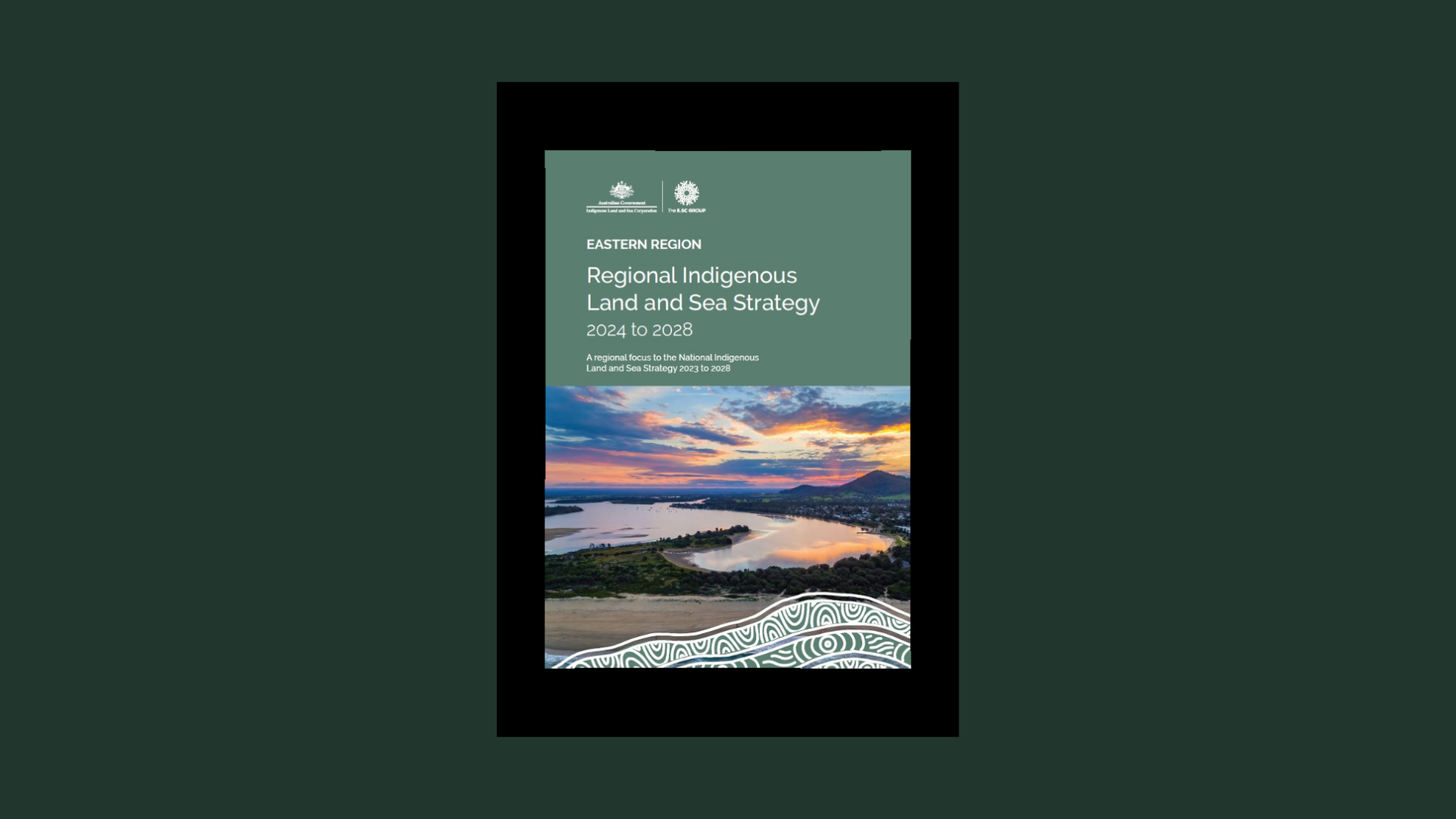
Regional Indigenous Land and Sea Strategies 2024-28 released
New Regional Indigenous Land and Sea Strategies were released for Central, Eastern, and Western regions.
2024
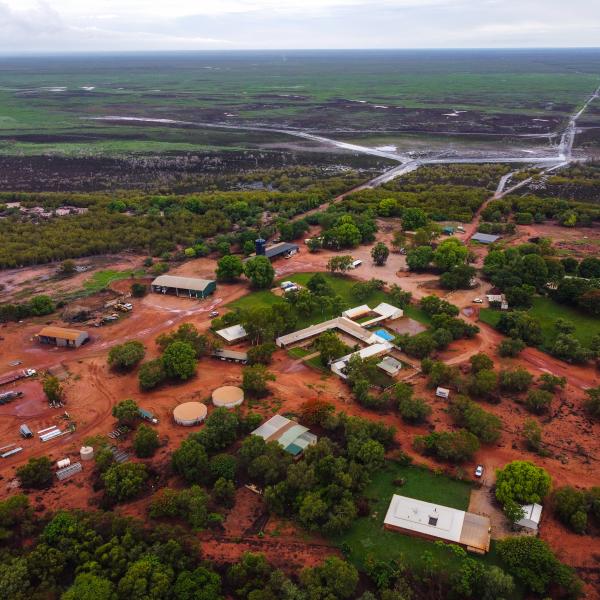
Primary Partners Pty Ltd Divestment
Primary Partners Pty Ltd – including its remaining agribusiness, Roebuck Export Depot – was divested to Nyama Buru Yawuru Ltd, marking the end of the ILSC’s direct involvement in pastoral operations.
2025
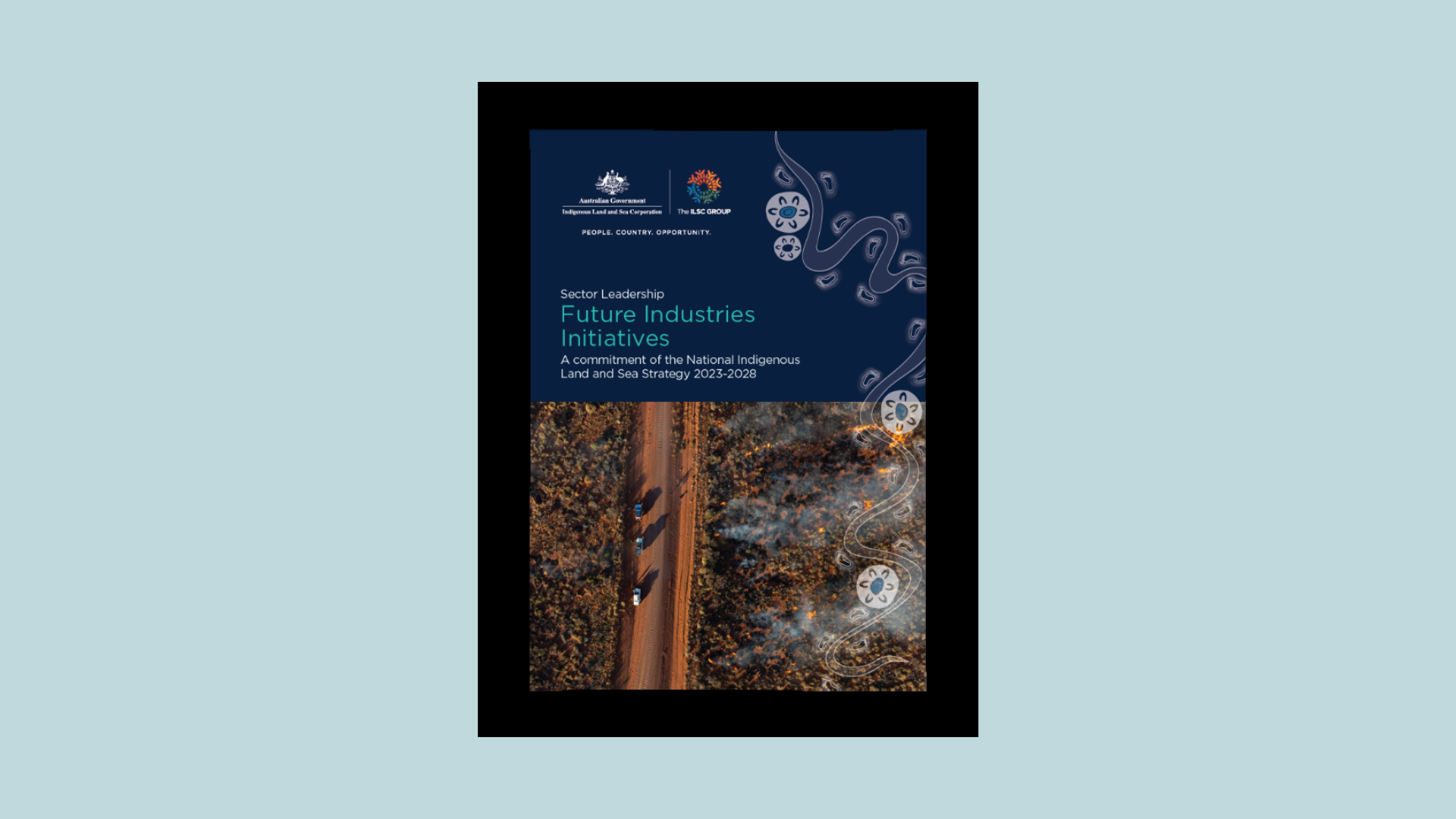
Future Industries Initiatives Grant Program launch
The Future Industries Initiatives publication and a small grants program were launched to support Indigenous ventures in carbon, renewables, environmental markets, and aquaculture.
ILSC: 30 Years of Change Podcast
The ILSC celebrated 30 years of impact with a podcast series. The series dives deep into the moments, people, and ideas that have shaped the ILSC and features guests who have all played a part throughout the ILSC’s 30-year-long journey. The stories, insights, and voices featured remind us all why the ILSC's work matters and how far its come.