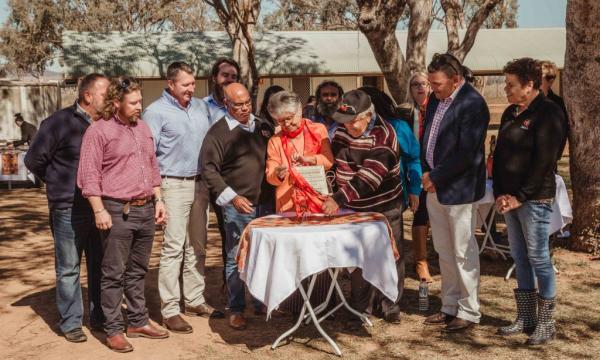
A Divestment Ceremony on Monday 3 August 2026 celebrated the handover of 252-hectare Beech
Forest property from the Indigenous Land and Sea Corporation (ILSC) to Eastern Maar, who will
restore it for cultural, environmental and carbon enterprise outcomes.
Eastern Maar Aboriginal Corporation (EMAC) and the Indigenous Land and Sea Corporation (ILSC) came
together on Gadubanud Country earlier this month to formally celebrate the divestment of Falbala, a 252-
hectare (623-acre) property at Beech Forest in the Otways.
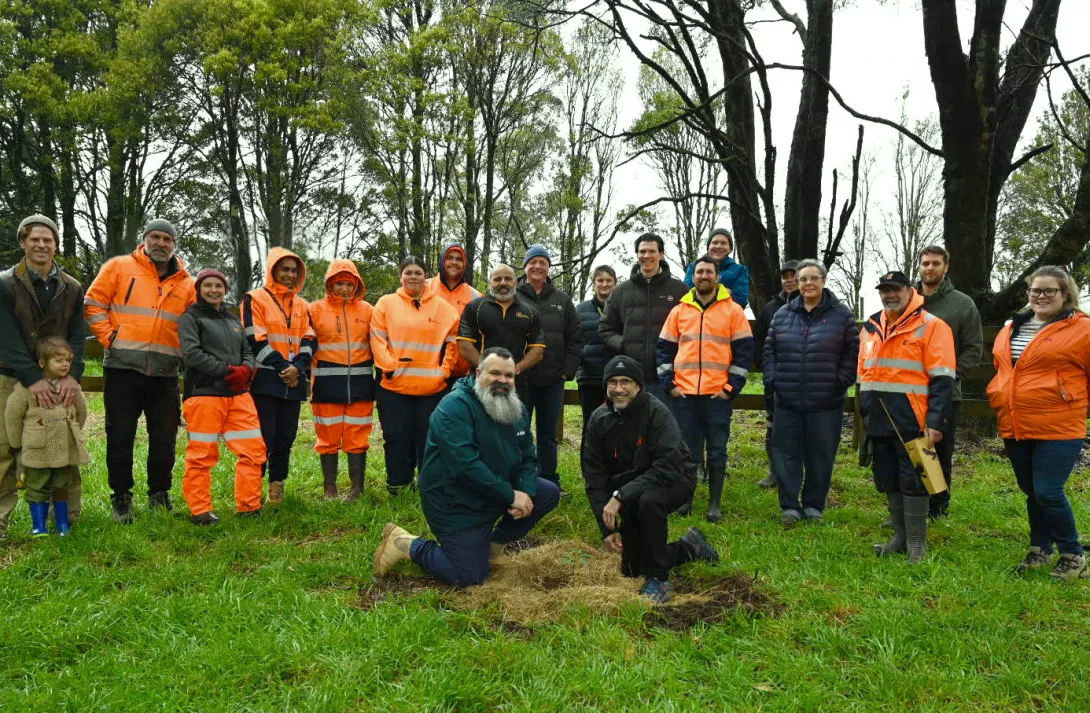
The ceremony, held on Country at Falbala, brought together Eastern Maar Traditional Owners, ILSC
representatives and project partners to mark the culmination of more than four and a half years of planning
and preparation — a process that, once underway, moved with real momentum. The divestment of Falbala
reflects the ILSC's deepest motivation of seeing land returned to the hands of Traditional Owners, to be cared
for and managed on their own terms. Ownership of the property was formally transferred from the ILSC to
EMAC in June 2025.
Falbala was purchased by the ILSC in 2002 and they commissioned an independent "Highest and Best Use"
study, which found that the property's steep slopes, high rainfall and soft soils made it difficult to sustain
traditional farming, and identified restoration and carbon farming as a more viable, sustainable long-term use for the land.
EMAC subsequently developed a detailed business case for a Traditional Owner-led carbon
enterprise model — a proposal that gave the process a clear path forward and helped things progress
efficiently from there.
Falbala will now become a base for cultural and environmental restoration, carbon enterprise and threatened
species sanctuary work, guided by EMAC's Country Plan. Restoration work will begin with a baseline study of
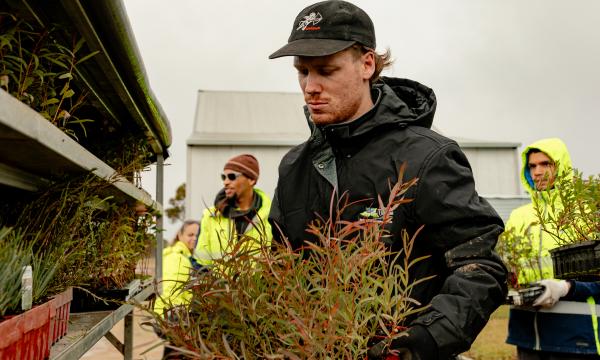
the property's soils, water and biodiversity, led by EMAC's On Country Guardians and ecology experts. In 2026,this will be followed by the planting of 20,000 local native plants — all carefully selected local species — with a further 100,000 plants to be established across remaining priority areas in 2027.
The project brings together a wide range of passionate specialists to guide the restoration of Falbala. The
work is supported by Carbon Neutral, who are working with EMAC to design and manage the carbon farming
project. The Odonata Foundation is also onboard to share their wealth of knowledge and skill in supporting
threatened species recovery, with the potential for Falbala to grow into a native wildlife sanctuary in the
future.
Funding and equipment support through the Victorian Government BushBank Program has been
crucial in enabling EMAC's On Country Guardians to scale up their capacity for restoration work. The ILSC will
remain a supporting force for Falbala as restoration unfolds in the years ahead. It is this coming together of
different skills and ways of knowing Country that will create a solid foundation for creating something truly
special on the property.
The project also creates job and training opportunities for young Eastern Maar people, who will learn
revegetation and ecology skills on Country alongside established Cultural knowledge holders, passing down
generations of knowledge about caring for Country. The work at Falbala is being undertaken with an eye to
future generations — restoring and protecting Country not just for today, but for those who come after, as
First Nations people have always done.
“This project represents years of hard work by people who have never given up, who have never
walked away, who continually argued that we exist and we matter, that this is our Country and we
will care for.”
“This divestment is going to be much more than nature restoration. It's restoration of us as a
people.”
“If the ILSC can play a meaningful part in the work at Falbala, then it’s a privilege for us to do that. It
gives us meaning and purpose.”
“It's a privilege to see our young people being on Country, doing work in this field, as these are
opportunities that generations before us were denied.”
“This project delivers on one of the biggest goals in our Country Plan, which is to hold and manage
land as a foundation for cultural, environmental and economic independence.”
"Falbala gives our community something rare: open access to Country we can call our own. Whether
it's Elders passing down knowledge or young people just spending time on the land, that access
changes everything."
“Falbala shows what can be achieved when long-term vision and passionate people from many
different fields bring their knowledge together for a shared purpose.”