

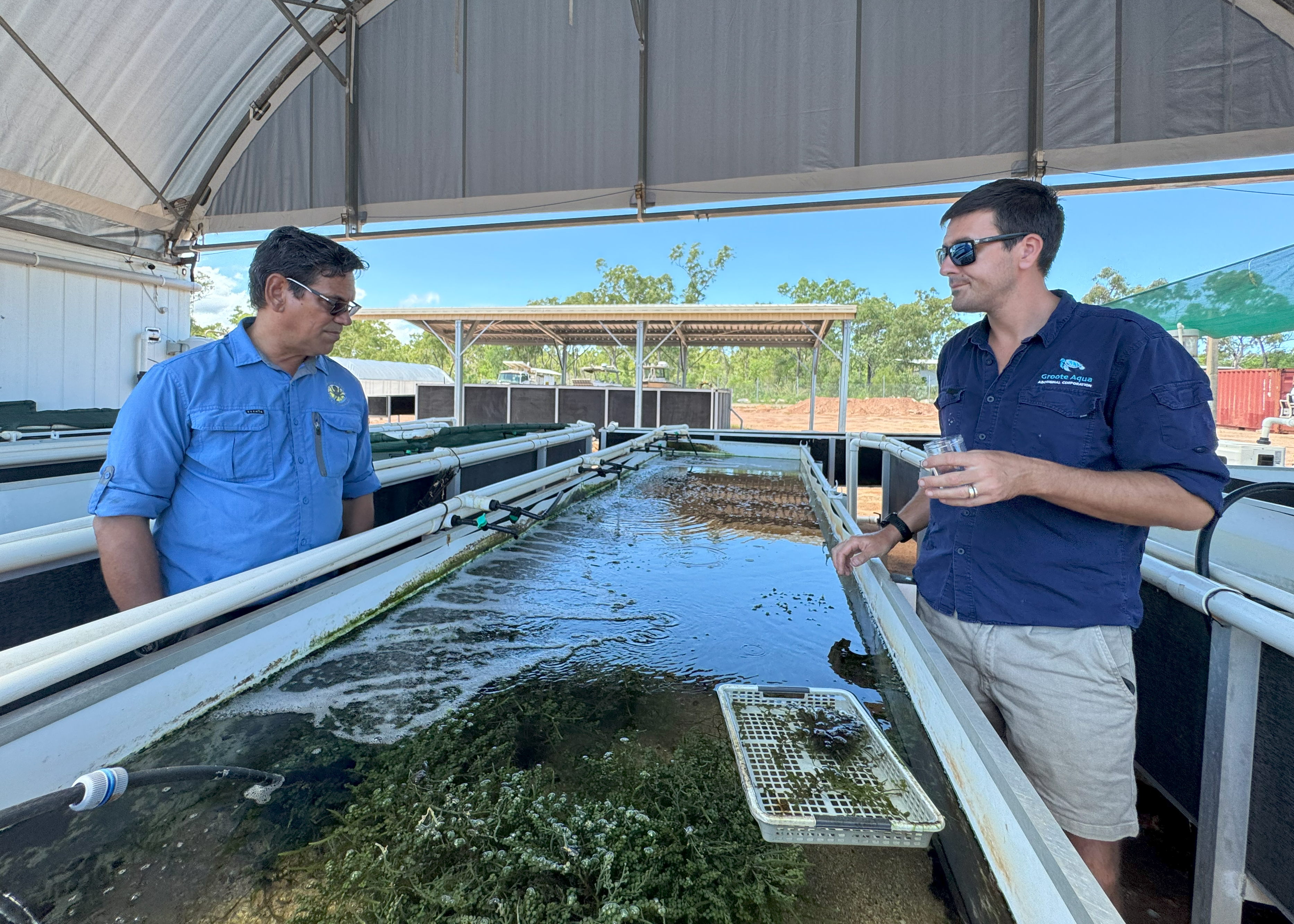
Some fishing and aquaculture opportunities mix traditional knowledge with modern methods and can lead to jobs, keep culture strong, and help create businesses that care for the environment.
Getting special licenses or government quotas is expensive and much harder but can be done.
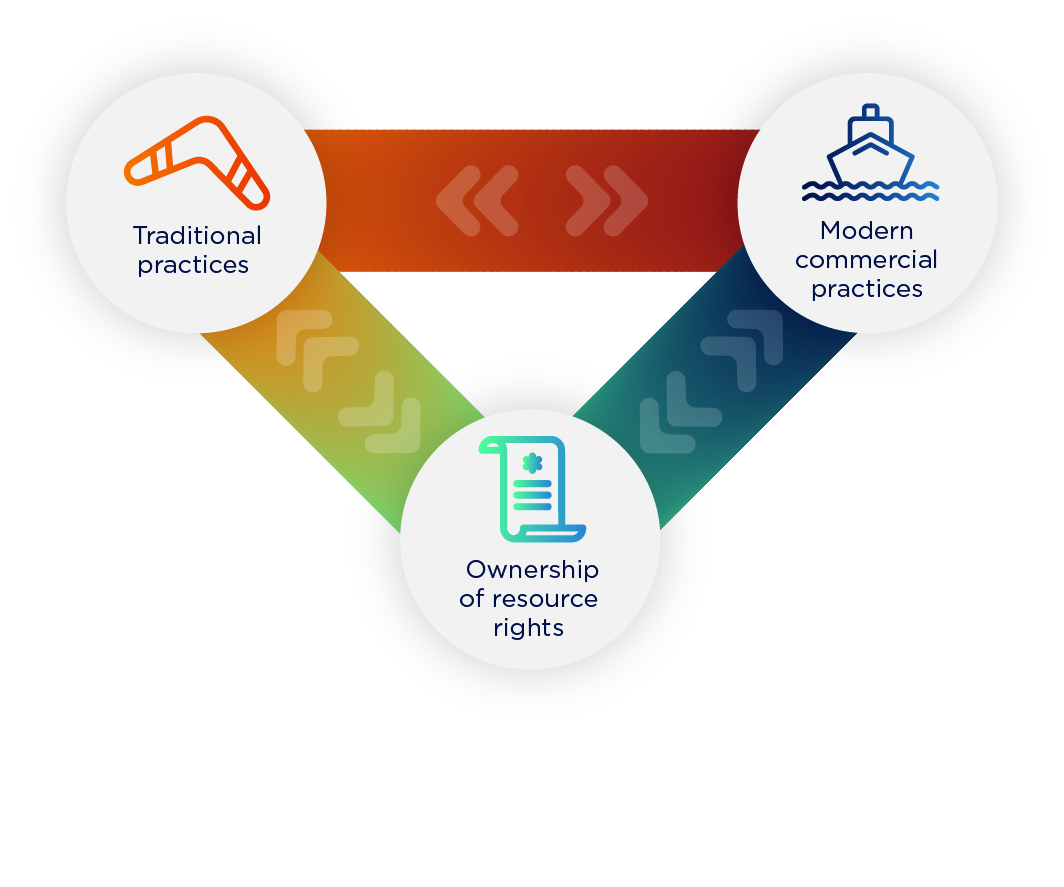
Some of the ways to get involved in this sector include:
- Cultural fishing, caring for Country
Indigenous Sea Ranger Programs provide jobs and opportunities to get involved and protect sea life, check fish stocks, and look after marine environments. Some states and territories also allow cultural catch and fishing using traditional methods for personal, family, or community use. This is often done under special permits or rights. - Building partnerships / working for others
There may be job opportunities working with scientists, engineers, or other businesses to help improve fishing and aquaculture practices. First Nations fisheries may also have job opportunities. - Starting a related business
There could be opportunities related to fishing that don’t require a license. This could be things like selling seafood (caught by others), offering eco-tours, or running educational programs about traditional fishing. - Advocacy and leadership
Going to events and conferences can help push for better policies and sustainable practices in the fishing industry. - Establishing a fishing business (commercial fishing)
Getting a commercial fishing license and quota is difficult and expensive. Specialist advice and skills are needed, and having a detailed plan and budget is essential before applying for a license. Many fishers begin by working on someone else’s boat before starting their own business.
Occasionally government authorities may identify ‘spare quota’, or new fish species that can be commercially harvested. If this happens, there may be opportunities for First Nations fishers to advocate for access.
Specialised First Nations pathways include:
- Customary-commercial licenses
- Government-assigned quota
- Partnerships and grants
