

Australia’s inland waters are managed through a system of rules about who can use water, how much water can be used, and how much must be kept for the health of waterways and the animals and plants that rely on them.
The right to use water is often organised into allocations and licences. In some areas, like the Murray Darling Basin, these rights can be traded between water users in different parts of the Basin.
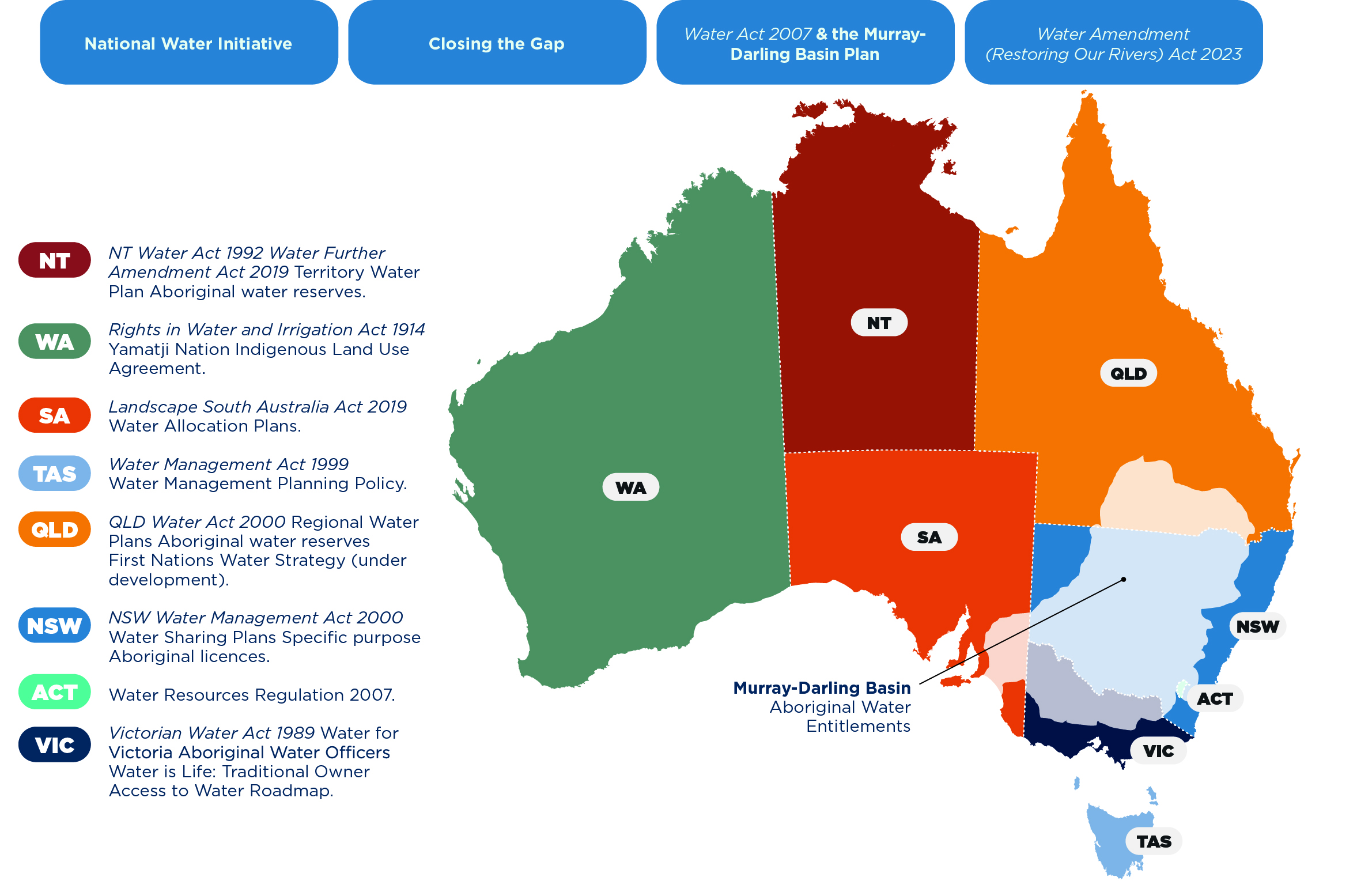
Australia has a national framework for managing water resources. States and territories follow this framework, and the ‘Murray Darling Basin Authority’ manages water sharing between the Basin states (NSW, ACT, SA, VIC, QLD).
States and territories have their own water laws and agencies that manage water in populated areas. This includes:
- Deciding how much water is available for use each year
- Sharing the water between the environment and other users like farmers, towns and industries
- Managing water delivery and infrastructure, like pipes and storage
The water market operates through a system of:
- Water Entitlements: Long-term rights to ‘own’ a share of the water resource in an area
- Water Allocations: How much water can be used each year
- Water Trading: Buying and selling water rights (this can be permanent or temporary)
First Nations people ‘own’ a very small amount of water entitlements - less than 1%. Some states and territories provide water for ‘cultural flows’.
This isn’t a formal water licence or allocation, but a negotiated volume of water for First Nations cultural purposes. Cultural flows support activities like fishing, hunting, ceremonies, and gathering medicinal plants. They also help protect important sites such as burial mounds, scarred trees, and campsites, helping maintain strong connections to Country. Beyond physical uses, cultural flows promote identity, wellbeing, capacity building, and intergenerational knowledge sharing.
Find out more


Quote from ‘A Pathway to Cultural Flows’
(Nelson, Godden, & Lindsey, 2018)“For First People, water is a sacred source of life. The natural flow of water sustains aquatic ecosystems that are central to our spirituality, our social and cultural economy, and our wellbeing. The rivers are the veins of Country, carrying water to sustain all parts of our sacred landscape. The wetlands are the kidneys, filtering the water as it passes through the land. First Nations Peoples have rights and a moral obligation to care for water under their law and customs. These obligations connect across communities and language groups, extending to downstream communities, throughout catchments, and over connected aquifer and groundwater systems.”