

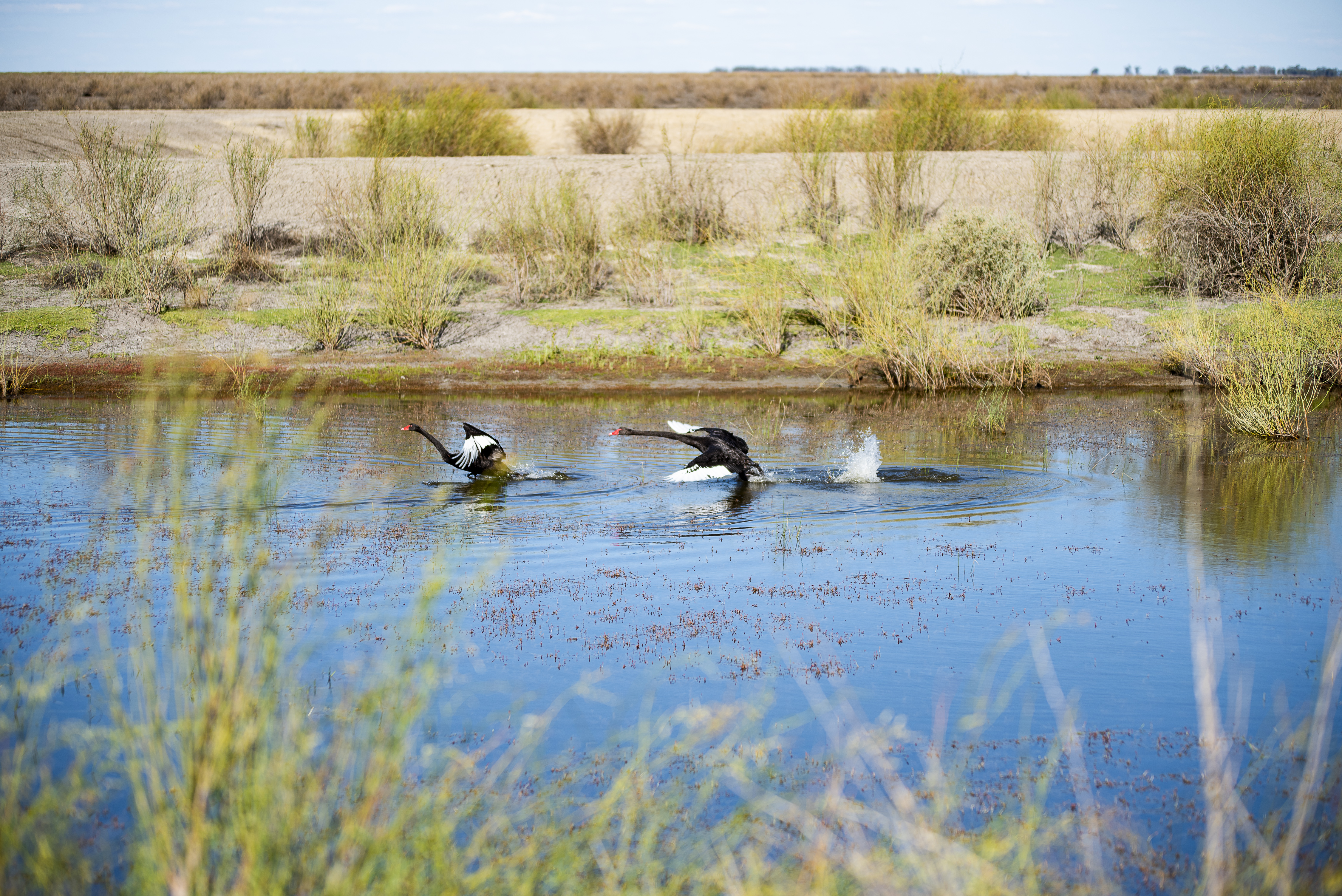
Australia’s inland water systems are managed by state and territory governments, each has its own way of managing water. Understanding these differences can help inform the best way to access water.
In Australia, water isn’t just used—it can be traded, like a product. People can buy and sell water ‘rights’, especially in places like the Murray–Darling Basin, where water is in high demand for irrigation.
A water ‘right’ is the legal permission to take or use water from a specific source (e.g. river, underground). These rights are set by state and territory laws and are sometimes called water products. Water plans describe how the water in a region will be shared between the environment, farmers, towns and other water users.
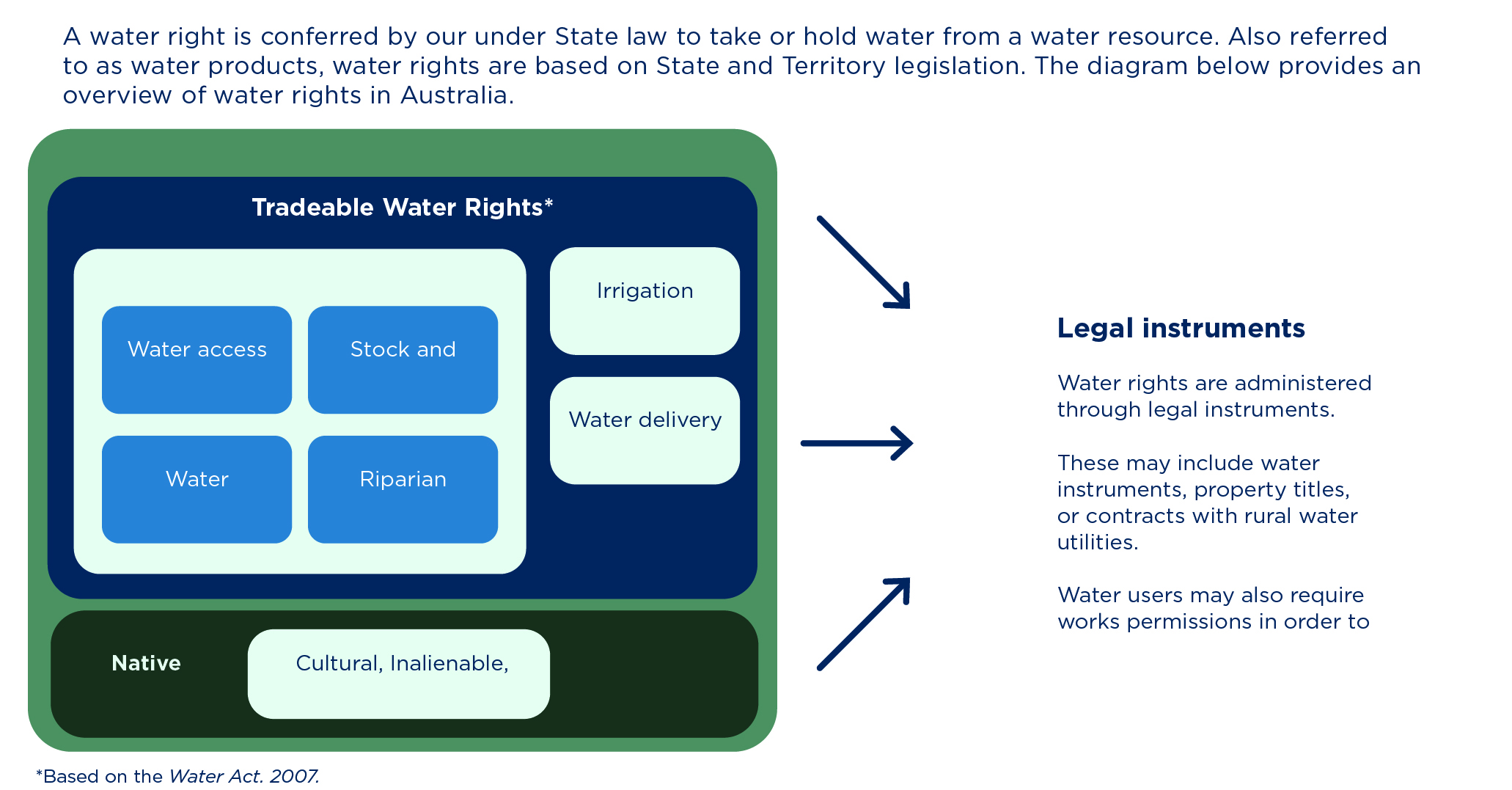
Water rights can include:
- Entitlements: Long-term rights to ‘own’ water
- Allocations: How much water can be used each year, based on what you ‘own’ and how much water is available
- Other rights: for household use, livestock or cultural purposes
An entitlement is like a bucket. The bigger the bucket, the more water you ‘own’. Water entitlements stay the same each year (the bucket does not change), but the allocation (amount of water in the bucket) changes every year depending on rainfall and other factors. For example, during a dry spell entitlement holders may only be allocated a fraction of their entitlement.
Two main types of water trade:
- Permanent trade: buying or selling water entitlements. This changes ‘ownership’ of the water right.
- Temporary trade: yearly leasing or sale of water allocations. This is for a specific amount of water. The amount of water that can be leased changes each year depending on how much is available (rainfall/storage levels)
The Murray-Darling Basin is Australia’s biggest water market. Water markets in other parts of Australia include Tasmania and the larger coastal rivers of Australia’s east coast.
Australia’s inland water regulations and schemes
Water plans guide how water is shared and protected across Australia. To use water, as well as having access to entitlements or allocations, people may need extra permission for infrastructure like pumps and pipes.

