

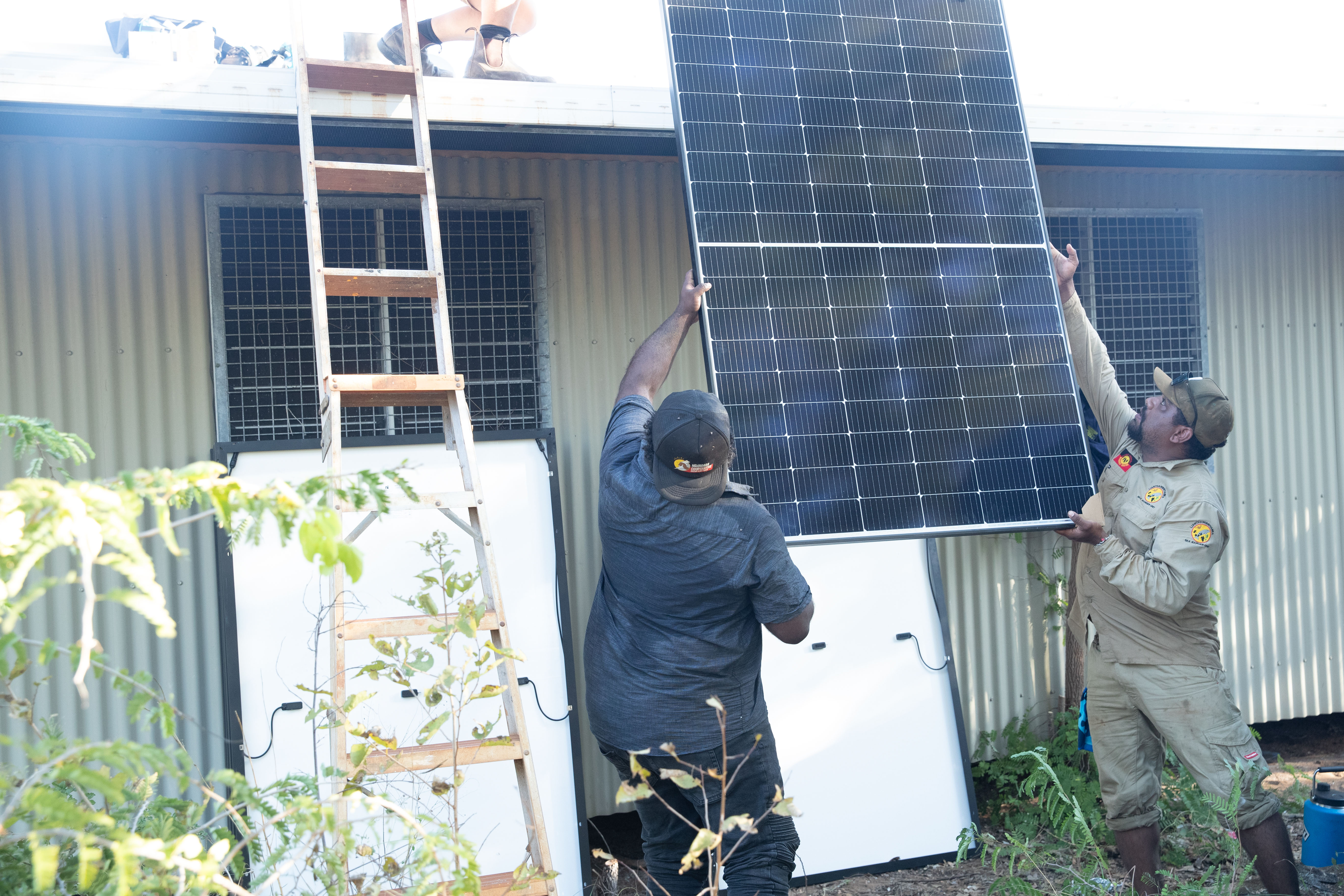
If you want to be part of Australia’s clean energy future, a good place to start is by looking at what’s possible on your Country. This might be a local project, something for community, or leading a large-scale project.
The Australian Government and private investors are putting a lot of money into clean energy. In 2024, over $21 billion had already been invested—but even more is needed to reach the 2030 goals. This creates opportunities for First Nations leadership and involvement in renewable energy projects across the country.
Community-led projects
Explore opportunities to lead your own clean energy projects. Using solar or wind power and batteries to make electricity cheaper for households, community centres and businesses. In remote areas these projects can help reduce the need for smelly, noisy and expensive diesel generators and make electricity more reliable.
Projects like solar microgrids and community energy systems can:
- Provide cheaper and more reliable power,
- Create local jobs,
- Support community ownership, and
- Help protect Country and culture.
Partnerships and large-scale projects
Native title and other First Nations rights cover more than half of Australia’s land, therefore there are important opportunities for First Nations people to play a key role in renewable and clean energy projects. There might be ways to make sure projects look after Country and contribute benefits to Community. There may also be opportunities to partner on big projects—like wind or solar farms and power transmission lines—which can bring long-term income and job opportunities.
By becoming partners or part-owners, communities can:
- Share in the profits,
- Help make decisions, and
- Support local jobs and training.
If you want to start a clean energy project, it’s important to know the laws and rules that apply. These can be different depending on where you are and what kind of project you want to do.
State/Territory
Large scale solar or wind farm project developers must apply for a Generation Licence under local legislation. They will also need a connection agreement with a network service provider (high voltage) to connect to the electricity grid. This may not be required for some small renewable projects (e.g. solar panels on roof).
