

Gayini wetlands
Gayini is one of the largest remaining wetlands in the southern Murray-Darling Basin. Managing such a large and complex site is a major challenge.
Country: Nari Nari
Project Partners: Indigenous Land and Sea Corporation, Nature Conservancy, Wyss Foundation
Sector(s): Inland Water
Restoring traditional management of a wetland
Gayini is a culturally significant property in southern New South Wales. The 88,000-hectare property was handed back to Traditional Custodians, the Nari Nari Tribal Council who now manage the property.
Gayini (Nimmie Caira) and its irrigation licenses were initially acquired by the Commonwealth and NSW Governments in 2013. Their goal was to “buy back” water for the environment.
The Nari Nari Tribal Council (NNTC), The Nature Conservancy, Wyss Foundation, ILSC and other partners then worked together to hand back the property to the Nari Nari people. This happened in 2019.
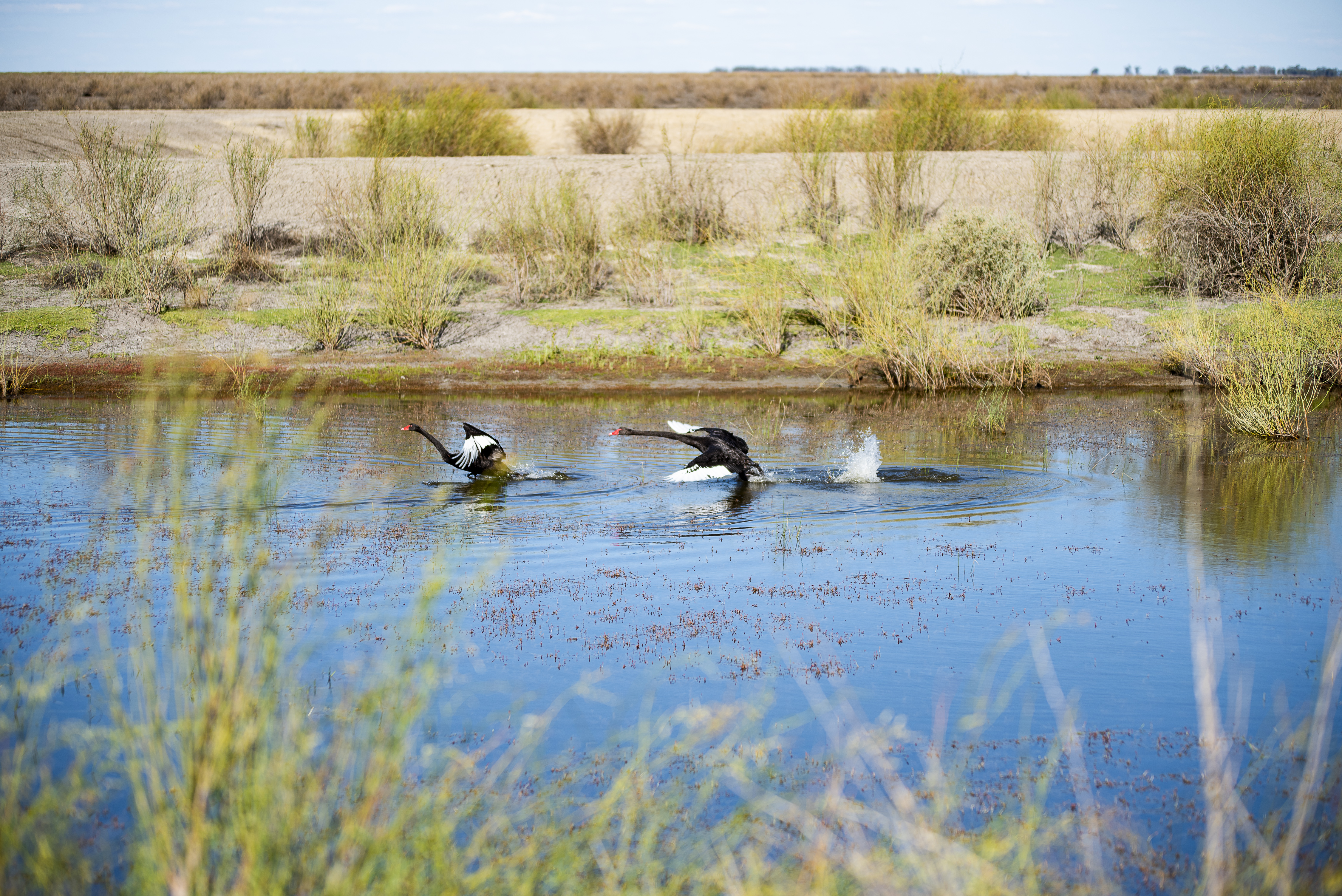
The Gayini property includes a culturally rich wetland that has supported Aboriginal people for more than 50,000 years. The property has many culturally significant sites, as well as national and international ecological significance.
The Nari Nari People are using a mix of traditional knowledge and modern techniques to care for Country, improve its productivity, and protect its cultural value. This includes showing how food production can work in harmony with nature, using low impact grazing and seasonal cropping. Over time, the Nari Nari people plan to shift towards a business model that’s more focused on nature and culture.
Instead of using water for crops, water use is balanced between commercial activities and environmental water for the wetlands. This enables caring for Country and the restoration of native fish and bird populations.
Managing the property has involved significant planning and includes:
- Protecting cultural and heritage sites
- Removing feral pests
- Reinstating a more natural flooding regime across the property
- Laying 400 km of pipes to deliver water to parts of the property
- Using a combination of traditional and modern methods
The Gayini property shows what’s possible when First Nations people, government, and funding partners work together.
What’s next?
Continue to care for Country and restore traditional cultural practices, as well as creating jobs and economic opportunities for the Nari Nari People.