


Protecting Budj Bim
The Gunditjmara People had limited access to their traditional lands, making it hard to care for and protect Country. Parts of the landscape were also separated by different ownership, and the natural water flows—crucial for traditional eel farming—were at risk of being disrupted.
Country: Gunditjmara
Project Partners: Indigenous Land and Sea Corporation
Sector(s): Inland Water, Fisheries and Aquaculture
Restoring Gunditjmara ownership and management of Budj Bim
Budj Bim, in southwest Victoria, is one of the world’s oldest and most advanced examples of First Nations aquaculture. For thousands of years, the Gunditjmara People built stone channels, dams, and weirs to farm and harvest kooyang (eels).
In 2019, Budj Bim was added to the UNESCO World Heritage List, recognising its global cultural and environmental importance.
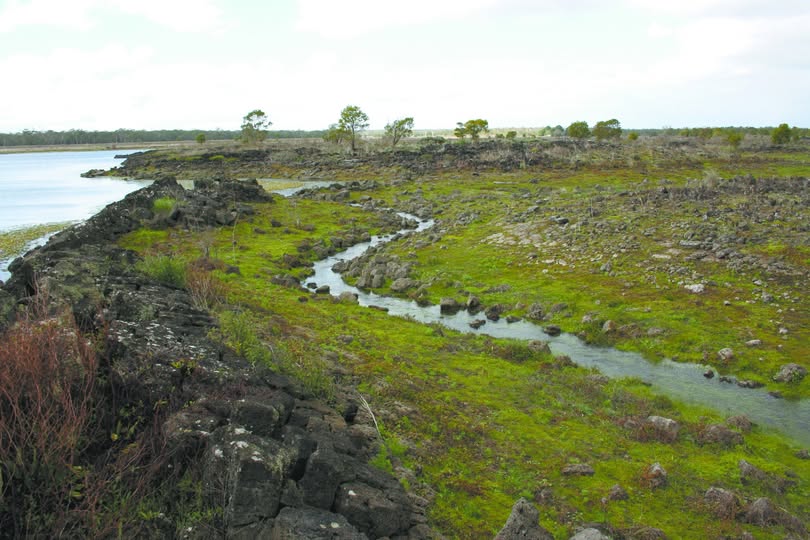
As well as the traditional aquaculture structures, the area has more than 300 stone houses, showing a deep connection to Country, as well as engineering skills, and community life.
To help protect and manage the site, the Indigenous Land and Sea Corporation supported the purchase of land for the Gunditj Mirring Traditional Owners Aboriginal Corporation (GMTOAC).
With the land returned to Gunditjmara ownership, there are now greater opportunities to not only protect water flows and preserve the area’s cultural significance, but other benefits including:
- Strengthened cultural connection and identity
- Training and jobs for local people
- Tourism and economic development opportunities
Budj Bim is now a leading example of Indigenous-led heritage protection, showing how tradition and innovation can work together to build a strong future.
What’s next?
Continue to protect the site’s heritage and environment for future generations.
Strengthen cultural connection and identity and create jobs and training opportunities for Gunditjmara people.
Read more: www.abc.net.au/news/deeptime/topic/food/budj-bim-eel-traps